
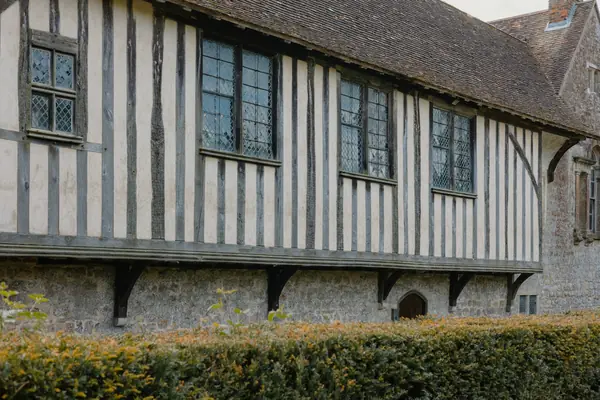
Wythenshawe Hall
A timber-framed Tudor hall built around 1540, badly damaged by arson in 2016 and reopened to visitors in 2022 after a long repair programme.
Learn more about Wythenshawe Hall on Google MapsAround Roundthorn, Sharston and Airport City, a lot of buildings run seven days a week: cargo handling, chilled distribution, server rooms. On those sites solar never has a quiet afternoon to waste. Everything the array makes is used, so a string that trips on Saturday is costing you at your full import rate from that moment on. Solar panel maintenance in Wythenshawe is built around that. We set up monitoring so faults are flagged quickly, then visit to test, image and repair. There's one local wrinkle as well. Arrays near the airport were usually designed with glare in mind, and repairs should keep it that way. A like-for-like panel swap is straightforward, but a change to tilt, orientation or panel type is worth checking against the original glare assessment before it goes ahead.
We reply within one working day to book a site visit.
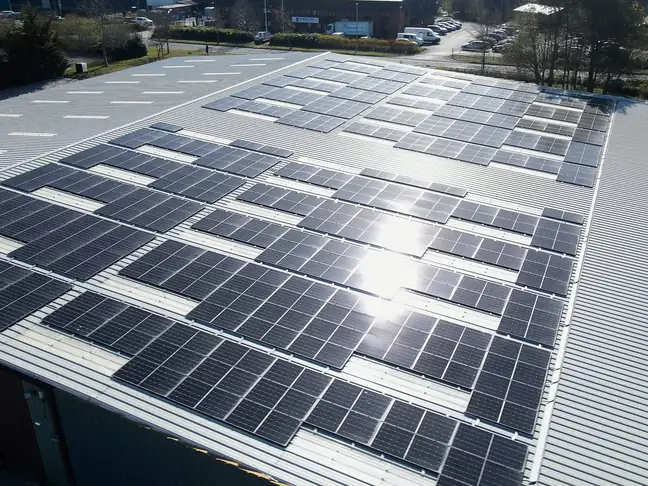
A site near the airport that runs all week uses everything its array makes, so a shortfall is easy to price once you know what the system should be producing. I work that baseline out carefully for each roof and canopy, and set alerts against it so faults don't wait for the next visit.
I'm Thomas. Over twenty years in solar have taught me that a small error in the expected yield hides a real fault. The calculations are my strongest point. On site we're punctual, we keep to the security rules and we treat your people and premises with respect.
- Thomas
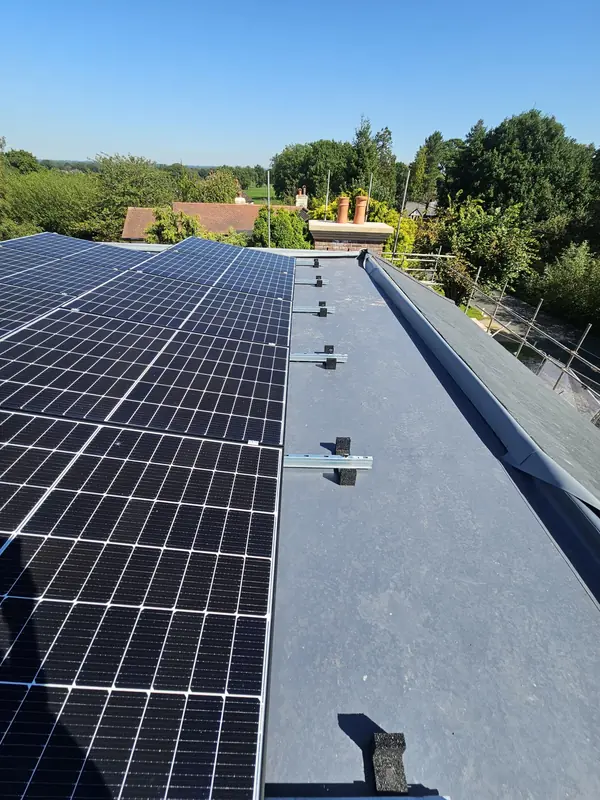
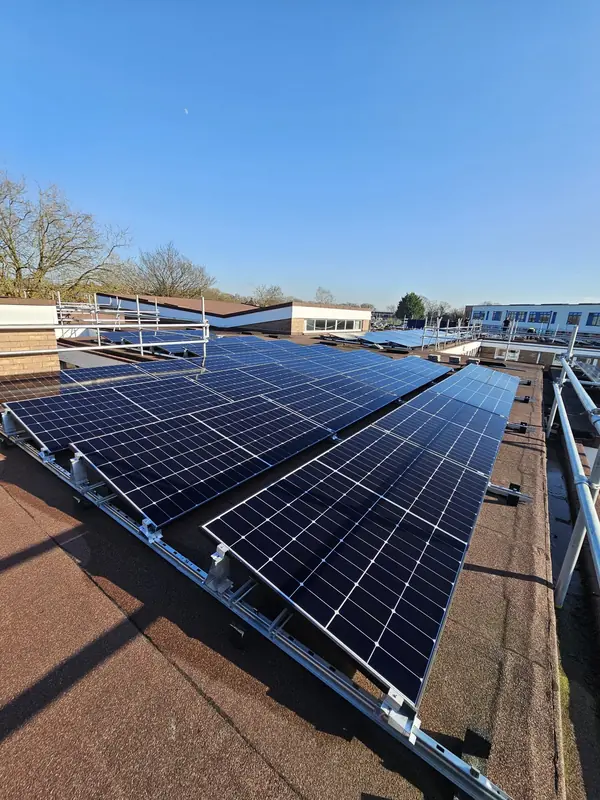
Constant load means constant value from the roof. These are the points that matter most near the airport.
01
On a 24-hour site there's rarely any export to fall back on. A lost string shows up straight away as extra import, so a monitoring alert followed by a prompt repair saves real money week by week.
02
Panel type, tilt and orientation near the airport were often set with glare in mind. When panels are replaced we match the originals or check the change first, so a repair doesn't create a new problem with safeguarding.
03
Canopies over staff parking need their steelwork, fixings and drainage looked at as well as the panels. Vehicle strikes on columns happen, and a bent leg is easier to deal with early.
04
Where EV chargers share a supply with a carport or roof array, we check how the systems interact, because a charger fault can look like a solar problem in the data and vice versa.
05
Busy sites around Sharston have heavy loads at shift change. Keeping inverters and any battery working properly helps the array support those peaks instead of dropping out.
06
Cargo and distribution yards are busy all hours. We agree a roof access point, a safe route and a time that avoids the busiest movements before arriving.
£0
Site survey and a review of your half-hourly data
kWh
Systems sized from your own meter readings
G99
Grid application drawn up and submitted for you
M17
Based on Trafford Wharf Road, Trafford Park
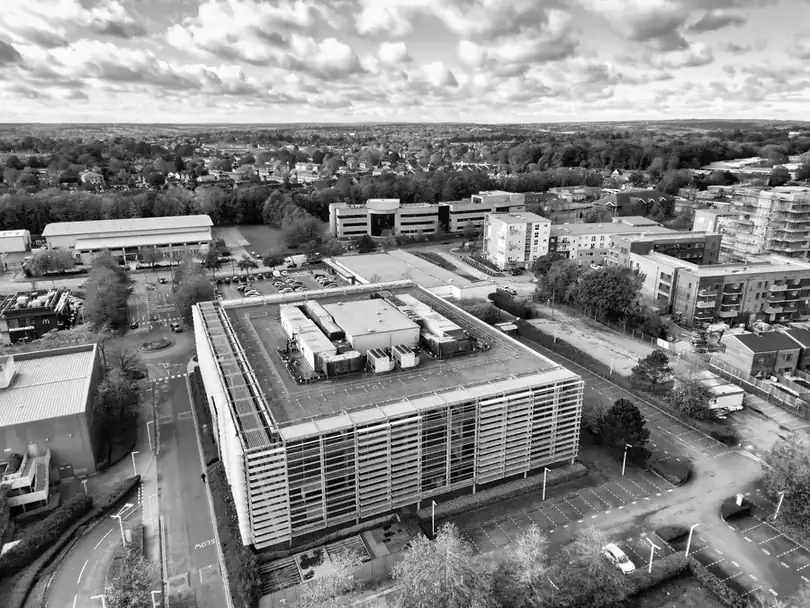
Wythenshawe's industrial estates grew up after the war beside garden-city housing, and many sites still have homes close by. That's worth bearing in mind with maintenance as much as with installs: early starts, noisy kit and lighting on the roof at night all affect neighbours, so we plan visits during the working day wherever possible.
The Airport City sites and the modern sheds at Roundthorn tend to have clean, recent roofs, and maintenance there is mostly electrical. Older buildings on Sharston Industrial Estate, some dating from the first wave of post-war industry, are more likely to need the roof itself checking around the panel fixings.
Shift-change peaks are also where a battery can help; our page on commercial battery storage in Wythenshawe explains how we size one for a site that never sleeps.
"On the round-the-clock sites we look at near the airport, a solar fault rarely stays hidden for long if monitoring is set up, and almost always does if it isn't."
We get read access to your inverter or logger data, or install our own, and look at recent output. On a 24-hour site we also set alerts so drops are flagged without waiting for the next visit.
If the array or carport went through prior approval or a glare study, we read the conditions, so any repair keeps panels, tilt and layout within what was agreed.
Airport-belt sites often have controlled entry and escorted roof access. We send names, vehicle details and method statements in advance so nothing holds the visit up at the gate.
Rooftop panels, clamps and cable trays are checked, carport steelwork, fixings and drainage are inspected, and thermal images are taken while everything is generating.
Strings are tested for voltage, current and insulation resistance, inverters and protection are checked, and any EV charger interaction with the solar supply is looked at.
Faulty connectors, loose clamps and minor damage are repaired. Panels are washed where data shows a loss from soiling, with care taken around vehicles parked under canopies.
You get a report with results, images and recommended work, plus confirmation of who receives monitoring alerts so a fault on a Sunday doesn't wait until Friday.
There are two layers of cover on a commercial installation, and it pays to know which is which. The first is the installer's workmanship guarantee. It covers the way the system was put in: the fixings through your roof, the cable runs, the terminations, the protective devices and the commissioning settings. Its length and terms are written into the quotation, so you can read them before you sign rather than discover them afterwards.
The second layer belongs to the manufacturers. Panels normally carry a product warranty and a separate performance warranty, which promises a minimum output after a set number of years. Inverters and batteries have their own terms, often with cycle or throughput limits on storage. These vary by product, so every proposal names the exact models and attaches their warranty documents.
A guarantee is only as good as the install underneath it. That's why the structural check comes before the design is fixed, why every string is tested and recorded to BS 7671, and why the grid connection is commissioned to the settings SP Electricity North West has approved. If something we fitted fails because of how it was fitted, we come back and put it right.
In writing
Workmanship guarantee, set out in your quote
Per model
Manufacturer product and performance warranties
Test results, drawings, warranty certificates and the grid connection agreement are handed over in one pack on the last day.
On a site that never stops, the downtime row in this table matters more than anywhere else we work.
| Comparison point | No arrangement | Call-out when it fails | Planned O&M |
|---|---|---|---|
| Who spots a fault | Usually the finance team, via the bill | Whoever notices the inverter screen | Monitoring alerts and scheduled tests |
| Likely downtime | Months | Weeks | Days |
| Insurer evidence | None | Repair invoices only | Dated test and thermal records |
| Cleaning | Rain only | When someone remembers | Scheduled to suit the site |
| Inverter end of life | Comes as a surprise | Comes as a surprise, but faster to fix | Planned and budgeted |
| Cost pattern | Nothing until a big bill | Unpredictable | Fixed, known in advance |
We quote after seeing the system and the site's access rules. These are the factors that tend to move a Wythenshawe price.
Controlled sites in Airport City and around the cargo area take longer to enter and work on than an open unit at Roundthorn, so escort time is included in the quote.
Inspecting canopy steelwork, foundations and drainage adds time compared with a roof-only system, though it's usually done on the same visit.
If there's no working monitoring, fitting a logger and setting up alerts is a one-off cost. On a 24-hour site it usually pays for itself the first time it catches a trip.
Where panels must be replaced like-for-like because of glare conditions, sourcing a matching model can cost more than the cheapest panel available. We tell you before ordering.
Straightforward repairs don't. Changing the array, for example adding panels, altering tilt or switching to a different glass finish, may count as new development. Above 50 kW that needs prior approval from Manchester City Council covering glare, and carport canopies fall under Class OA with similar conditions. Northenden's village core is the only conservation area nearby.
Because arrays near Manchester Airport were often designed and approved with panel angle and surface finish in mind. Replacing panels with a shinier type or changing the tilt could alter reflections towards flight paths or roads. Matching the original specification avoids reopening that question.
Yes. We inspect the steel frame, bolts, foundations and drainage as well as the panels and wiring. Bays under the section being worked on are coned off for the visit, and the rest of the car park stays in use.
With monitoring and alerts set up properly, usually within a day or two of it happening. Without them, it can go unnoticed until the next bill or the next visit. Getting alerts to the right person is one of the first things we sort out.
A timber-framed Tudor hall built around 1540, badly damaged by arson in 2016 and reopened to visitors in 2022 after a long repair programme.
Learn more about Wythenshawe Hall on Google Maps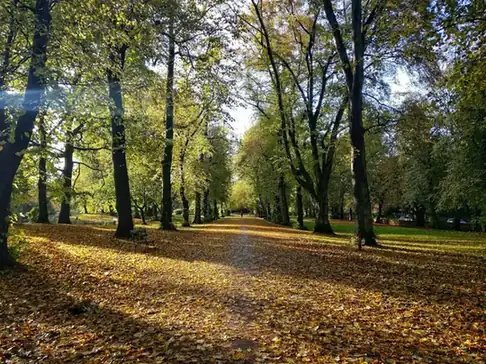
The big public park around the hall, with open parkland, woodland, a statue of Oliver Cromwell, a community farm and a horticulture centre.
Learn more about Wythenshawe Park on Google Maps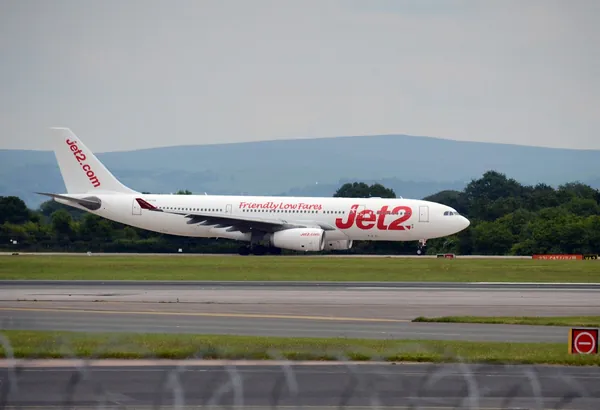
A viewing park on the edge of Manchester Airport where you can watch aircraft take off and land, and tour Concorde G-BOAC, on display here since 2004.
Learn more about Runway Visitor Park on Google MapsWe're a new name, so you won't find a wall of reviews here yet. We'd rather show you nothing than make some up.
For a project this size, reviews were never the best evidence anyway. Ask any installer you're considering for a reference site you can visit, a year or more of generation data from a system they fitted, and the grid connection paperwork from a past job. If they can't produce those, keep looking.
Send us recent generation data or monitoring access, and tell us about any carports or chargers on site. We'll come back with a view on whether something needs fixing.