
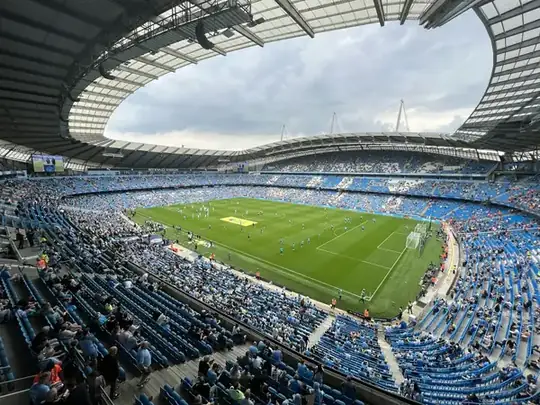
Etihad Stadium
Built for the 2002 Commonwealth Games and now Manchester City's home, the stadium at the heart of the Etihad Campus offers tours on non-match days.
Learn more about Etihad Stadium on Google MapsEast Manchester factories give solar panels a harder life than most roofs. Extraction outlets from CNC cells, paint booths and heat-treatment ovens vent onto the same roof the array sits on, and over a year that fallout settles as a film rain doesn't shift. Add older sheet roofs around Gorton and Openshaw, where fixings have been through decades of weather, and you have the two things solar panel maintenance here mostly deals with: soiling and the roof underneath. Both cost money in a way that's easy to put a number on. DESNZ gave 27.7p per kWh as the average business price in the second quarter of 2026 for sites using 500 to 1,999 MWh a year, and a works running machines through the day uses nearly every unit its roof makes. We measure the loss first, then fix what's causing it.
We reply within one working day to book a site visit.
On a works with extraction venting onto the roof, I don't wash panels just because they look grubby. I compare the strings nearest the outlets with the clean ones, work out what the difference is costing at your unit price, and clean when it pays. That's a calculation, and it's the kind I enjoy.
I've been in commercial and residential solar for more than twenty years, and the engineering side is where I'm strongest. We run an efficient visit around your production, keep a high standard on the roof and turn up when we say.
- Thomas
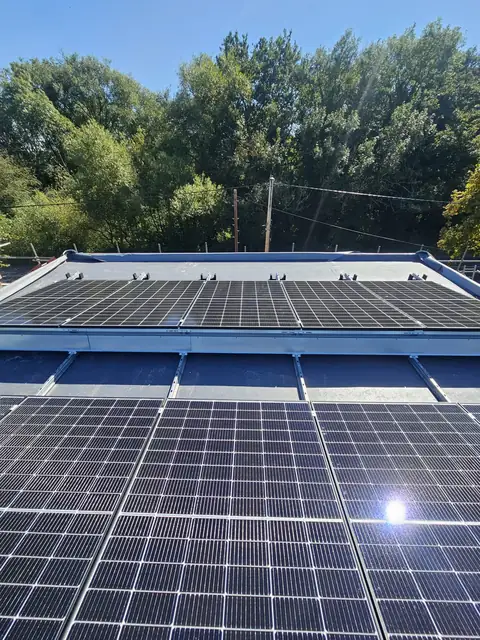
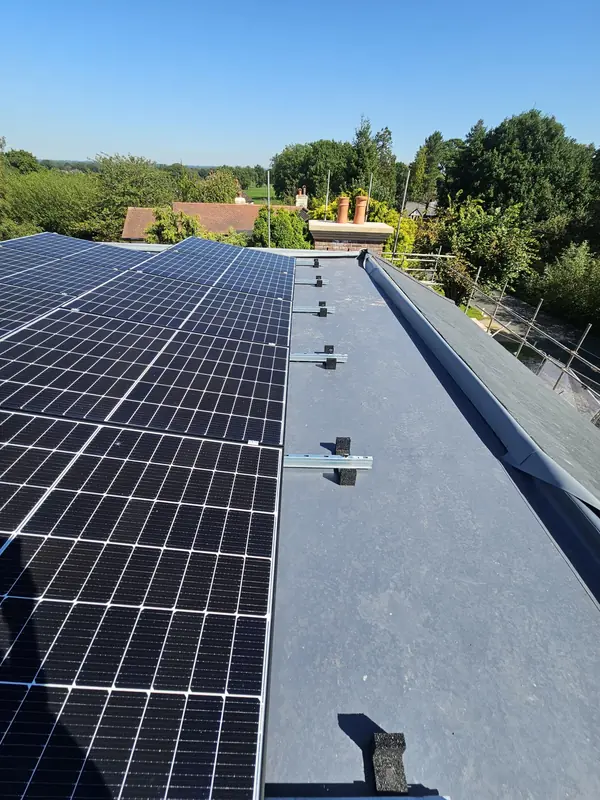
For a daytime manufacturer the array's value is all in self-consumption, so lost output is lost at the full unit price.
01
Panels downwind of a vent can be noticeably dirtier than the rest of the array. We compare string outputs across the roof, which shows where fallout is hurting most, and clean those sections on a schedule that matches.
02
Plenty of sheds on Kelbrook Road and along Ashton Old Road were built mid-century. Where panels are fixed through or onto older sheeting, we check the fixings and seals, because a slow leak above a production line causes trouble out of all proportion to the repair.
03
A trip at the start of the month on a busy works can cost a noticeable sum before anyone reads the bill. Monitoring with alerts, plus a quick check of the data whenever something looks odd, keeps that window short.
04
Inverters mounted inside a hot workshop or beside process plant run warmer and age faster. We check ventilation, dust build-up on heat sinks and error logs, and suggest moving a unit if its position is shortening its life.
05
Factory insurers already ask about fire risk from process plant. Dated thermal surveys and test results for the array show it has been checked against the RC62 guidance and is one less question at renewal.
06
We treat older fibre-cement sheets as fragile until proven otherwise, set up walkways and protect roof lights. That access plan is written once for your building and reused on every visit.
£0
Site survey and a review of your half-hourly data
kWh
Systems sized from your own meter readings
G99
Grid application drawn up and submitted for you
M17
Based on Trafford Wharf Road, Trafford Park
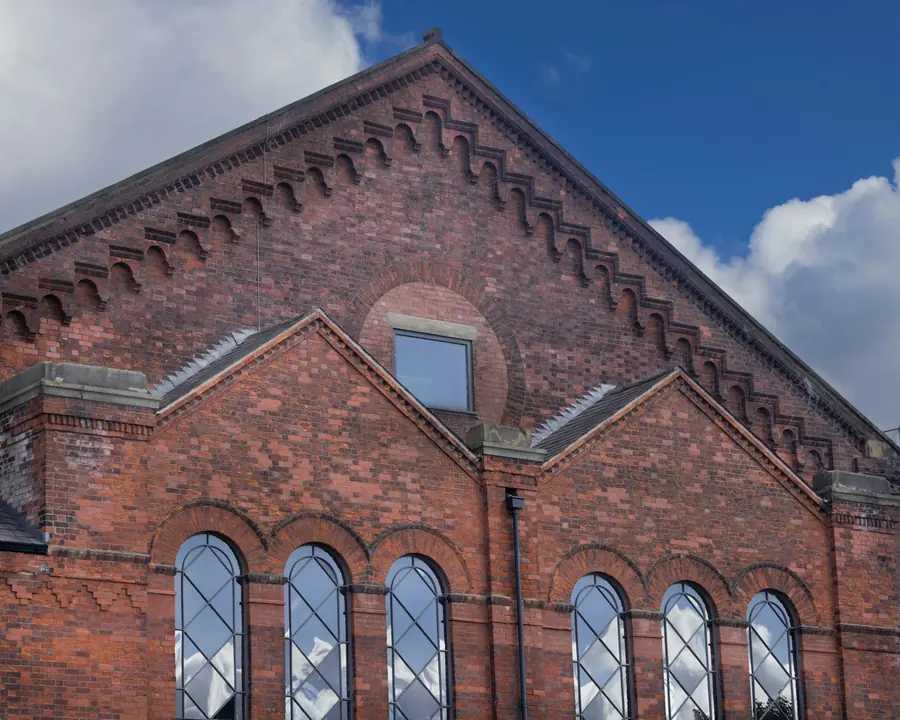
The land left by the Gorton and Openshaw locomotive works filled up with steel sheds and brick workshops, many run by the same family firm for decades. Arrays here were often added in stages as money allowed, so one roof may have panels and inverters of three different ages. We record every part separately so it's clear which section is underperforming and why.
On larger works the DC cable run from roof to inverter, and from inverter to the main board, can be long and pass through areas with forklifts, cranes and heat. We check the cable route as carefully as the panels, because damage at floor level is more common here than damage on the roof.
If your works' bill is set by a few spiky half-hours, a battery may do more than extra panels; see commercial battery storage in East Manchester on shaving those peaks.
"The dirtiest panels on an East Manchester factory roof are usually the ones nearest the extraction outlets, and the string data often shows it before you can see it."
We find out when the works runs, when the roof is quietest and whether the monitoring shows a drop. That tells us when to visit and which part of the array to start on.
Before going up we note where extraction, flues and steam outlets discharge onto the roof, so we can compare those panels with the rest and keep the team clear of hot exhausts.
Roof construction is confirmed, fragile areas marked and protected, and walkways or edge protection set out. Old sheet roofs get the same caution on every visit.
Panels, frames, fixings and seals are checked on the roof. Down below, we follow the cables through the building looking for impact damage, heat and poor support.
A thermal survey runs while the array is generating, then each string is tested for voltage, current and insulation resistance, and inverters and AC protection are checked.
Sections affected by fallout are cleaned with purified water, and connectors, seals and fixings are repaired where needed. Larger repairs are quoted for you to approve.
Your report includes test results, thermal images and a cleaning plan for the dirtiest sections, so you're paying to wash the panels that need it rather than the whole roof.
There are two layers of cover on a commercial installation, and it pays to know which is which. The first is the installer's workmanship guarantee. It covers the way the system was put in: the fixings through your roof, the cable runs, the terminations, the protective devices and the commissioning settings. Its length and terms are written into the quotation, so you can read them before you sign rather than discover them afterwards.
The second layer belongs to the manufacturers. Panels normally carry a product warranty and a separate performance warranty, which promises a minimum output after a set number of years. Inverters and batteries have their own terms, often with cycle or throughput limits on storage. These vary by product, so every proposal names the exact models and attaches their warranty documents.
A guarantee is only as good as the install underneath it. That's why the structural check comes before the design is fixed, why every string is tested and recorded to BS 7671, and why the grid connection is commissioned to the settings SP Electricity North West has approved. If something we fitted fails because of how it was fitted, we come back and put it right.
In writing
Workmanship guarantee, set out in your quote
Per model
Manufacturer product and performance warranties
Test results, drawings, warranty certificates and the grid connection agreement are handed over in one pack on the last day.
Most manufacturers here treat their machines on a planned schedule and their solar reactively, if at all. The table compares the approaches.
| Comparison point | No arrangement | Call-out when it fails | Planned O&M |
|---|---|---|---|
| Who spots a fault | Usually the finance team, via the bill | Whoever notices the inverter screen | Monitoring alerts and scheduled tests |
| Likely downtime | Months | Weeks | Days |
| Insurer evidence | None | Repair invoices only | Dated test and thermal records |
| Cleaning | Rain only | When someone remembers | Scheduled to suit the site |
| Inverter end of life | Comes as a surprise | Comes as a surprise, but faster to fix | Planned and budgeted |
| Cost pattern | Nothing until a big bill | Unpredictable | Fixed, known in advance |
Prices follow a survey of the system and the building. These are the variables we see most often on the old engineering land east of the city.
A modern steel roof is quicker and cheaper to work on than an older fibre-cement shed around Gorton, where staging and walkways go in before any testing starts.
Arrays near extraction or oven outlets may need cleaning more often. We price cleaning by section, so you pay for the panels that need it.
A roof with panels and inverters added in stages takes longer to test and document than one installed in a single job. The first visit includes recording each section.
Some works on Pottery Lane or Ashton Old Road prefer roof work at weekends or after the day shift. Visits outside normal hours are priced accordingly.
Routine repairs and like-for-like panel swaps don't usually need any approval. Extending the array is new development under Class J, and prior approval from Manchester City Council applies above 50 kW. If the works sits within the Newton Heath/Graver Lane or Gore Brook Valley conservation areas, we'd check with the council before altering the layout.
There's no fixed answer, because it depends on what's being vented and how close the panels are. We compare the output of panels near the outlets with ones further away. When the gap is big enough to pay for a clean, it's time to wash them, and that pattern usually settles into a schedule within a year.
Yes. Isolating the array doesn't affect your grid supply, so machines keep running. We can work during the day, after the shift or at weekends depending on access and safety around the roof.
Not necessarily, but heat and dust shorten their life. We check the ambient temperature, airflow and dust on the heat sinks, and look at the error history. If a unit is consistently running hot, moving it or improving its ventilation is often cheaper than replacing it early.
Yes. We record each section on its own, test it, and produce a single set of drawings and records for the whole system. That makes later faults much quicker to trace.
Built for the 2002 Commonwealth Games and now Manchester City's home, the stadium at the heart of the Etihad Campus offers tours on non-match days.
Learn more about Etihad Stadium on Google Maps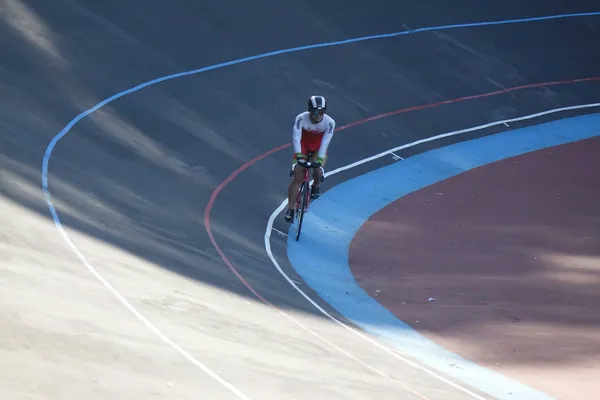
The Manchester Velodrome opened in 1994 as the home of British Cycling; the public can book track taster sessions and use the BMX centre next door.
Learn more about National Cycling Centre on Google Maps
Opened in 1846 as one of the first municipal parks in the world, with woodland walks, a mountain bike trail and a quiet stretch of the River Medlock beside Alan Turing Way.
Learn more about Philips Park on Google MapsWe're a new name, so you won't find a wall of reviews here yet. We'd rather show you nothing than make some up.
For a project this size, reviews were never the best evidence anyway. Ask any installer you're considering for a reference site you can visit, a year or more of generation data from a system they fitted, and the grid connection paperwork from a past job. If they can't produce those, keep looking.
Send a few months of generation data and tell us where the extraction outlets are. We'll say whether soiling, a fault or something else looks like the cause.