
Commercial Solar Panels Manchester
Commercial Solar Panels & Battery Storage Manchester
Rooftop solar, battery storage and carports for factories, warehouses, wholesalers and offices across Manchester and the boroughs around it
We design and fit commercial solar panels for Manchester businesses, working out of Trafford Park, where the city's biggest cluster of industrial buildings starts at the end of our road. The sites solar suits best have a steady daytime load. Think of a press shop in Openshaw, a chilled warehouse near the airport, or a Cheetham Hill wholesaler with the lights on from seven till six. Every unit the roof makes in working hours is a unit you don't buy from the grid. We start with a year of your half-hourly meter data, not a rule of thumb, and size the system to what the building actually uses.
Request A Free Solar Feasibility Check
We reply within one working day to book a site visit.
Free site survey
Roof, switchroom and meter data looked at properly
Written proposal
Yield, savings and payback shown line by line
Grid paperwork done
G98 or G99 forms to SP Electricity North West
Trafford Park base
M17, a few minutes from the M60 and M602
£0
Site survey and a review of your half-hourly data
kWh
Systems sized from your own meter readings
G99
Grid application drawn up and submitted for you
M17
Based on Trafford Wharf Road, Trafford Park
Commercial solar and storage, from one roof to a whole estate
Rooftop panels are the core of what we do. Batteries come next, usually on sites that run into the evening or keep tripping their agreed capacity. Ground arrays, carports and maintenance cover the sites where the roof isn't the answer, or where someone else fitted the system and it has stopped earning.
Commercial Solar Panels
Arrays for steel-clad sheds, flat roofs and older brick buildings, sized against your demand so as little as possible is exported cheaply.
Learn more about commercial solar panels in Manchester →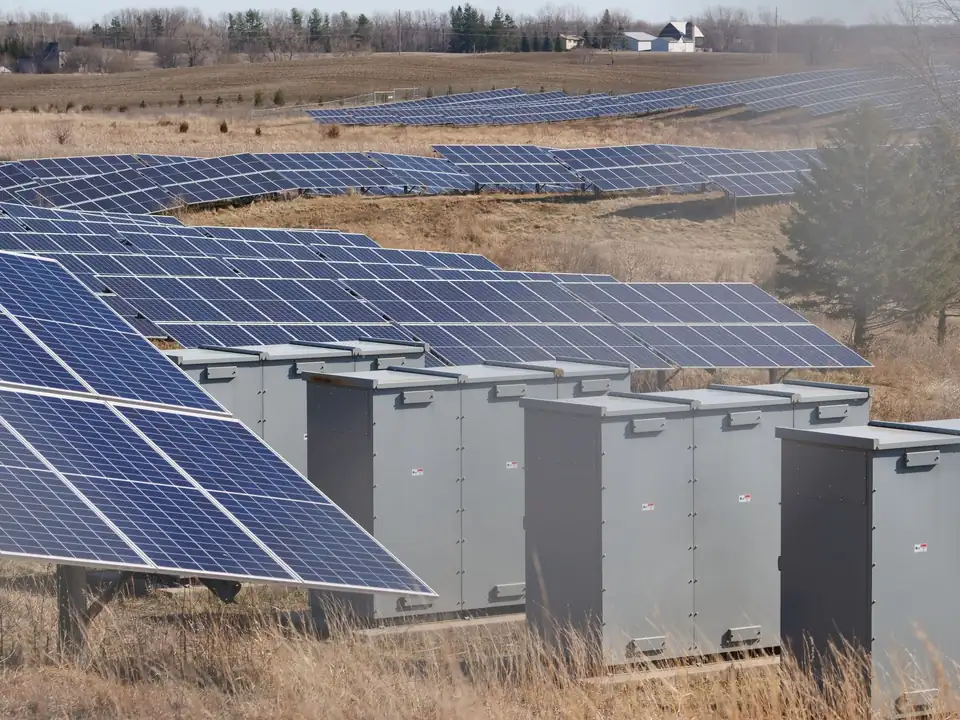
Commercial Battery Storage
Store midday surplus, run through the 4pm to 7pm red band on your own power and stop paying for capacity spikes.
Learn more about commercial battery storage in Manchester →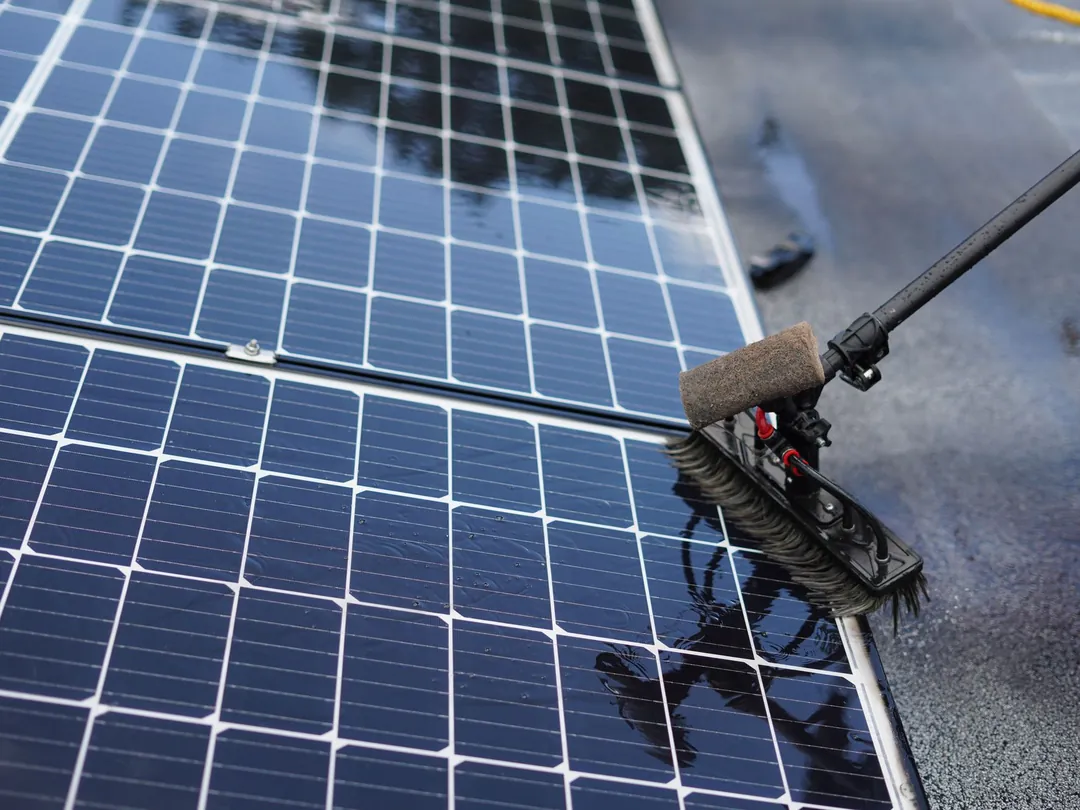
Solar Maintenance & Repairs
Inverter faults, failed strings, monitoring that went quiet two years ago. We test, fix and report on systems we didn't install.
Learn more about solar maintenance & repairs in Manchester →Also: Ground-mounted solar · Solar carports · Solar and battery costs
Why commercial solar pays its way in Manchester
The city's reputation for rain is worse than its weather. Here is how the local numbers actually stack up for a business roof.
-
Sunshine close to the UK average
The Met Office station at Woodford, in south Manchester, averages 1,385 hours of sunshine a year against a UK figure of about 1,403. Rainfall there is 868mm, well under the national average. Grey days still generate. They just generate less, and the design allows for it.
-
About 900 units per kilowatt on a good pitch
The EU's PVGIS model puts a south-facing panel at 35 degrees in Trafford Park at roughly 900 kWh per kWp a year. Low-tilt flat-roof layouts land nearer 818. So a 100 kWp roof makes something like 82,000 to 90,000 kWh, depending on how it's laid out.
-
Business power is still expensive
Government figures put the average non-domestic price in 2025 at 24.3p per kWh including Climate Change Levy, and 29.1p for small users. That's well above the 13.8p average of 2020. Each solar kWh used on site avoids that price, levy included.
-
Daytime loads match the curve
Manufacturing, distribution and wholesale sites draw most of their power between morning and late afternoon. Solar output follows the same shape. The closer the match, the less you export at a low rate and the faster the system pays back.
-
Business rates don't go up
In England, on-site renewable generation and the batteries used with it are exempt from business rates until 31 March 2035. Adding panels to your roof does not add to your rateable value during that period.
-
Rooftop arrays rarely need planning
Since December 2023 there's no size cap on permitted development for solar on non-domestic roofs. Bigger systems need a prior approval check on appearance and glare, which we prepare. Listed buildings are the main exception.
Why Manchester firms talk to us first
Panels are a commodity. The design work, the grid application and the honesty about payback are what separate one proposal from another.
- We size from your half-hourly data, so the proposal shows how much you'd use, how much you'd export and when.
- Someone climbs the roof and opens the switchroom before any figures are put in front of you.
- Fragile roofs and asbestos-cement sheets are flagged at survey, with the cost of dealing with them shown separately rather than buried.
- We prepare and submit the G98 or G99 application to SP Electricity North West and tell you plainly if an export limit is likely.
- If the numbers don't work for your building, the proposal says so. A battery you don't need is a bad investment however it's dressed up.
How to judge a commercial solar proposal (ours included)
Most proposals look alike on the front page. The difference is in the assumptions underneath. These are the questions we'd ask of any installer, and the ones we expect you to ask us.
Where did the consumption figure come from?
A proposal built on your annual bill divided by twelve can't tell daytime use from night use. Ask whether the installer modelled your half-hourly data. If they didn't, the self-consumption figure is a guess.
What export rate is assumed?
Smart Export Guarantee payments aren't guaranteed for every business, and rates vary by supplier. Check what price the model puts on exported units and whether a supplier has actually offered it to you.
Has anyone checked the roof?
Ask whether a structural engineer has looked at the loading, and what the roof sheets are made of. HSE says to treat every roof as fragile until a competent person says otherwise, and fibre-cement sheets are one of the main causes of fatal falls.
What happens with the DNO?
Anything bigger than 16A per phase needs a G99 application. Ask who submits it, whether an export limit is expected, and whether the price includes any network charges SP Electricity North West might quote.
Which fire guidance was followed?
Insurers increasingly expect commercial rooftop arrays to follow RC62, the joint fire-safety code published in 2023. Ask for the design to show isolation, cable routes and spacing, then send it to your insurer before work starts.
What's in the handover pack?
You should get test certificates, as-built drawings, the grid connection paperwork, warranty documents and logins for the monitoring. If an installer is vague about any of these now, they'll be harder to pin down later.
"Most of the factory roofs we're asked about could carry more panels than the building can use in a working day, so the first design conversation is usually about what to leave off."
How a commercial solar project runs, from first call to export meter
- 1
Data and a site visit
You send a year of half-hourly consumption data. We walk the roof, check the sheets, fixings and rooflights, look at the switchroom and note where scaffold or edge protection would go.
- 2
Design and written proposal
We model yield for your roof's pitch and orientation against your demand profile. The proposal shows system size, expected generation, the share used on site, savings at your tariff and a payback range.
- 3
Structure, grid and permissions
A structural engineer confirms the roof can take the load. We submit the G99 application to SP Electricity North West and, for larger rooftop arrays, the prior approval to your council.
- 4
Access and mounting
Edge protection or scaffold goes up first, with fragile areas covered or fenced off. Rails or ballast frames are fixed to suit the roof type, whether that's trapezoidal steel, standing seam or felt.
- 5
Panels, cabling and inverters
Panels go on, strings are cabled back along planned routes, and inverters are fitted near the point of connection. Where a shutdown is needed to connect into your board, it's booked for a quiet hour.
- 6
Testing and commissioning
Every string is tested and recorded, isolation is checked, and the system is commissioned to the conditions in the connection agreement. Any export limiting device is set and proved.
- 7
Handover and monitoring
You get the certificates, drawings and warranty documents, plus access to live monitoring. We help set up an export tariff if you're exporting, and agree what servicing makes sense.
Who answers for your Manchester installation, and for how long
There are two layers of cover on a commercial installation, and it pays to know which is which. The first is the installer's workmanship guarantee. It covers the way the system was put in: the fixings through your roof, the cable runs, the terminations, the protective devices and the commissioning settings. Its length and terms are written into the quotation, so you can read them before you sign rather than discover them afterwards.
The second layer belongs to the manufacturers. Panels normally carry a product warranty and a separate performance warranty, which promises a minimum output after a set number of years. Inverters and batteries have their own terms, often with cycle or throughput limits on storage. These vary by product, so every proposal names the exact models and attaches their warranty documents.
A guarantee is only as good as the install underneath it. That's why the structural check comes before the design is fixed, why every string is tested and recorded to BS 7671, and why the grid connection is commissioned to the settings SP Electricity North West has approved. If something we fitted fails because of how it was fitted, we come back and put it right.
In writing
Workmanship guarantee, set out in your quote
Per model
Manufacturer product and performance warranties
Test results, drawings, warranty certificates and the grid connection agreement are handed over in one pack on the last day.
What goes on, and around, a commercial roof
Panel brand matters less than people think. The mounting, the inverter choice and the way the system is protected decide how well it performs in year fifteen.
Mono PERC and n-type panels
The standard choice now. Higher-efficiency modules help where roof space is tight or broken up by rooflights.
Rail systems for steel roofs
Clamps on standing seam or brackets through trapezoidal sheets into the purlins, with sealing that suits the profile.
Ballasted flat-roof frames
East-west layouts that need no penetrations. Fit more panels, but the extra weight has to be checked by an engineer.
String and hybrid inverters
String inverters for most commercial arrays; hybrids where a battery is planned now or later.
Lithium iron phosphate batteries
The usual chemistry for commercial storage, valued for cycle life and thermal stability.
Monitoring and export control
Half-hourly generation data online, plus a limiter where the grid connection caps what you can send out.
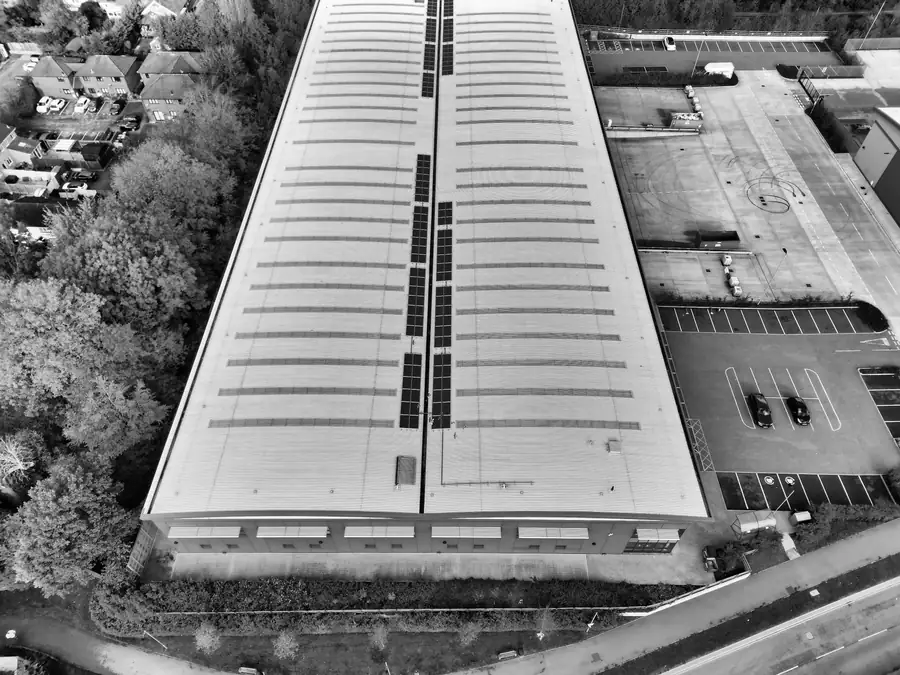
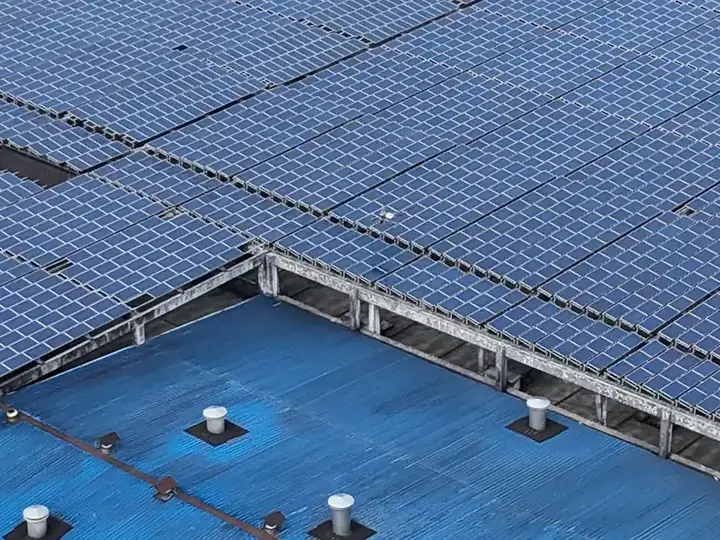
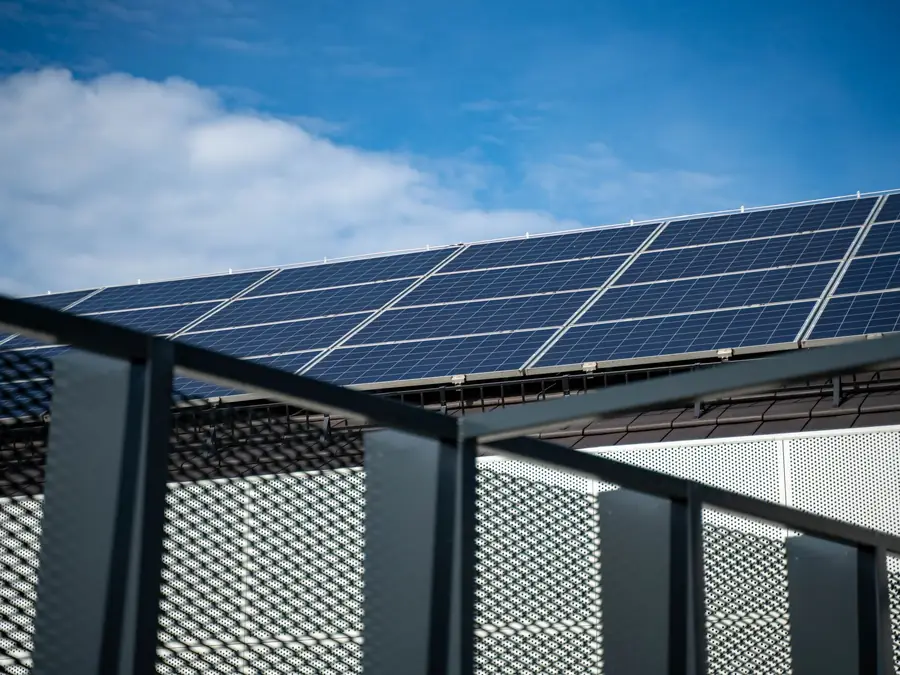
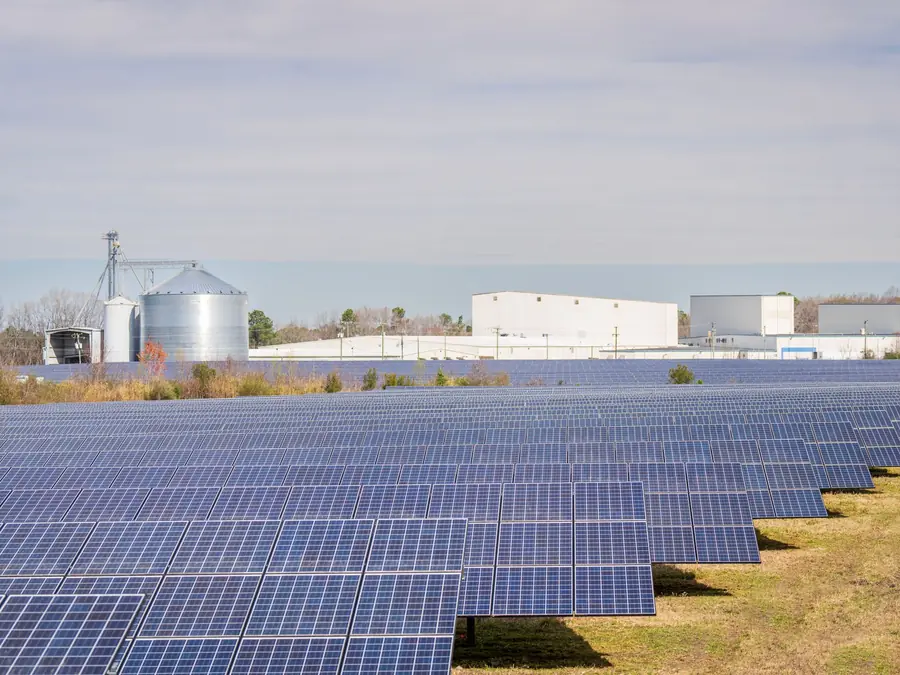
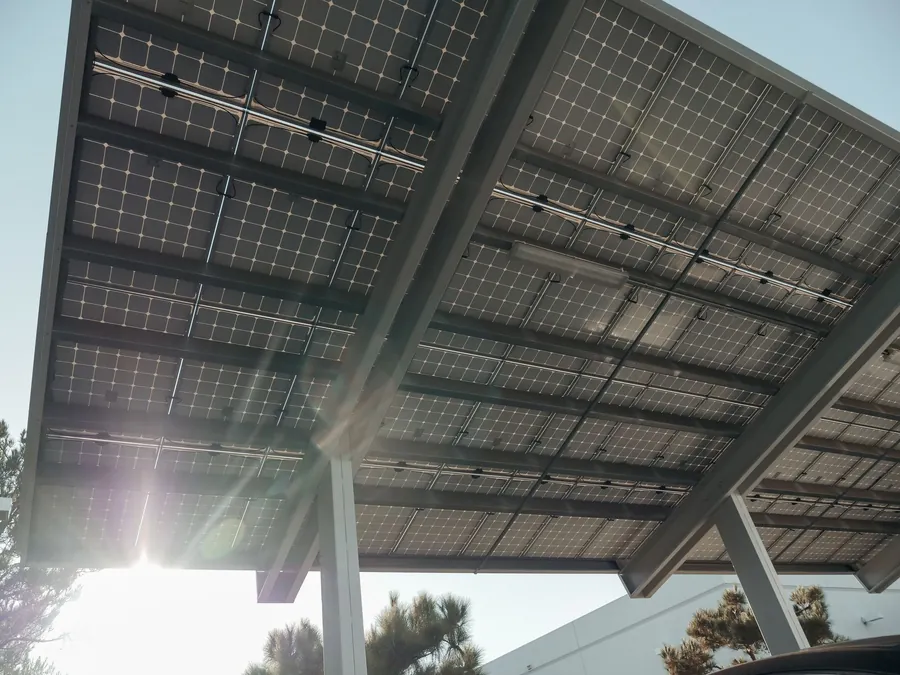
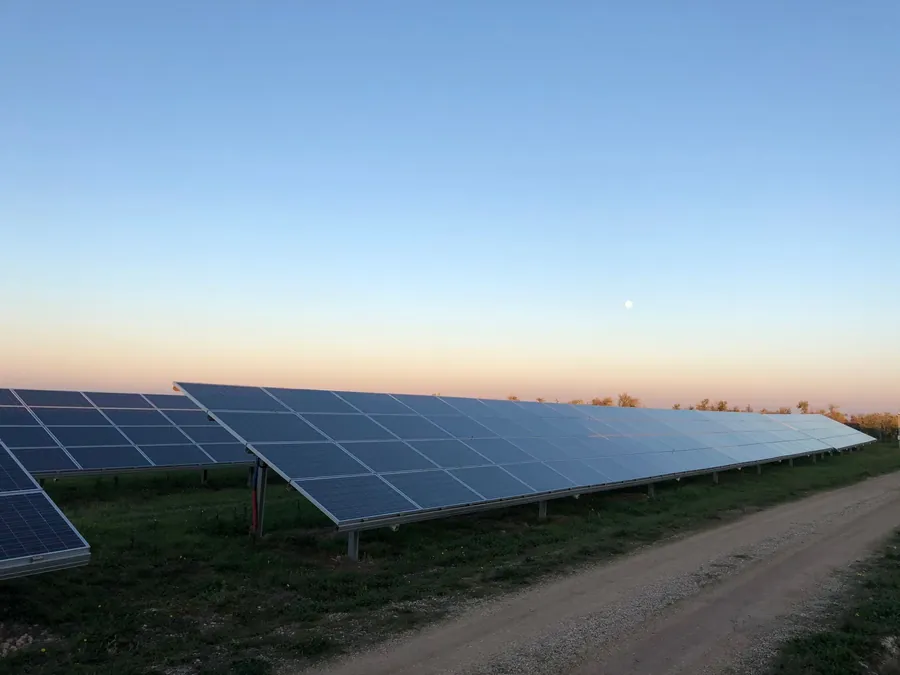
What a commercial solar install can look like
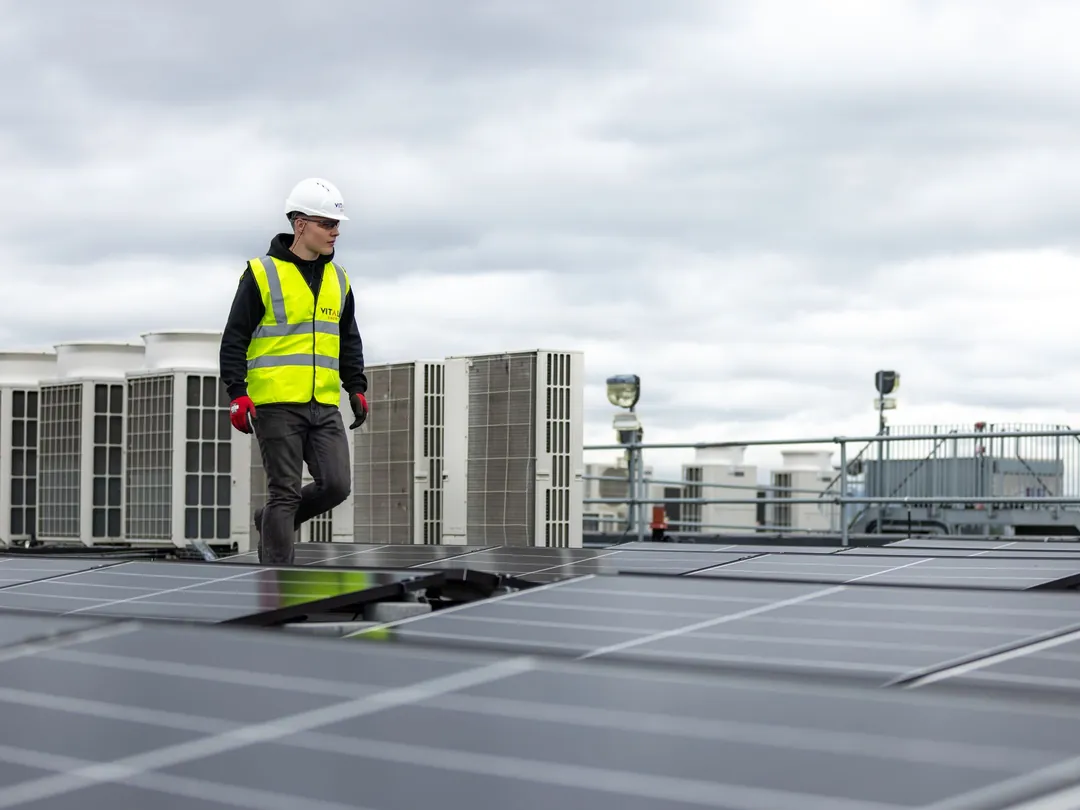
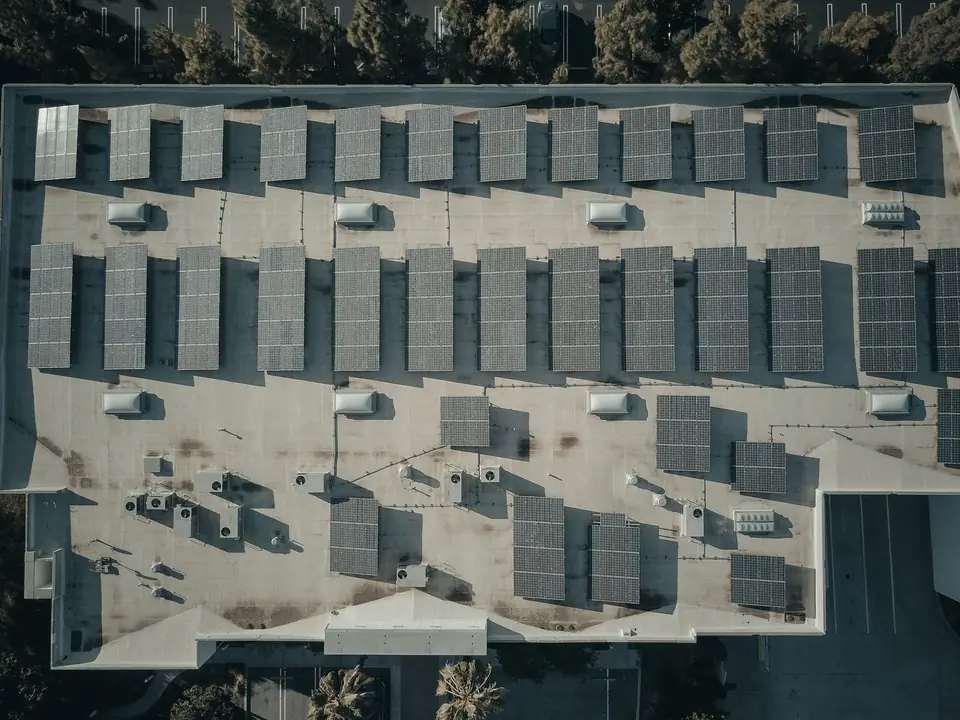
These are stock photos of other people's systems, used to show the kinds of layout we design. They are not our installations. Photos of our own Manchester jobs will replace them.
What Manchester businesses say about us
We're a new name, so you won't find a wall of reviews here yet. We'd rather show you nothing than make some up.
For a project this size, reviews were never the best evidence anyway. Ask any installer you're considering for a reference site you can visit, a year or more of generation data from a system they fitted, and the grid connection paperwork from a past job. If they can't produce those, keep looking.
Notes on solar and storage for Manchester businesses
10 October 2026
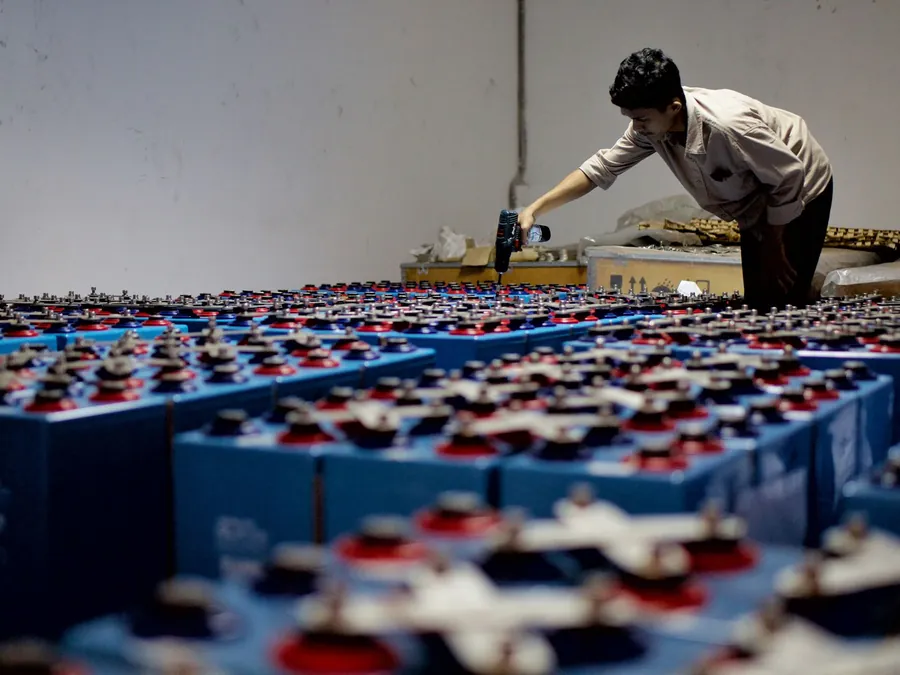
Is Battery Storage Worth It For A Manchester Business?
When commercial battery storage pays for a Manchester business: SP Electricity North West's 4-7pm red band, kVA capacity charges, export limits and backup.
10 October 2026
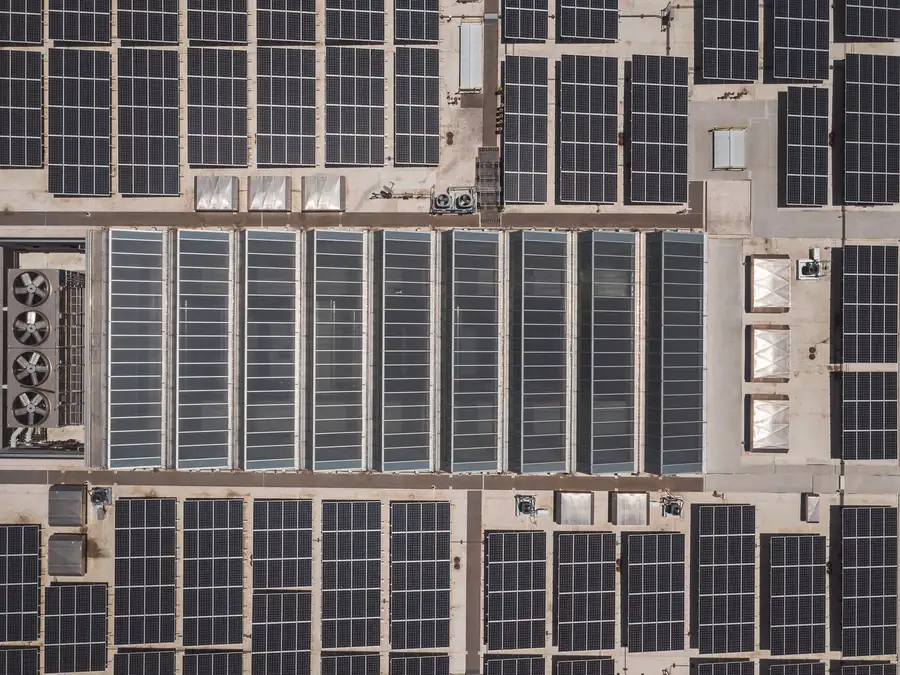
How Much Do Commercial Solar Panels Cost In Manchester?
What commercial solar panels cost in Manchester, using official DESNZ figures: what pushes the price up, how payback works here, and the tax reliefs.
10 October 2026
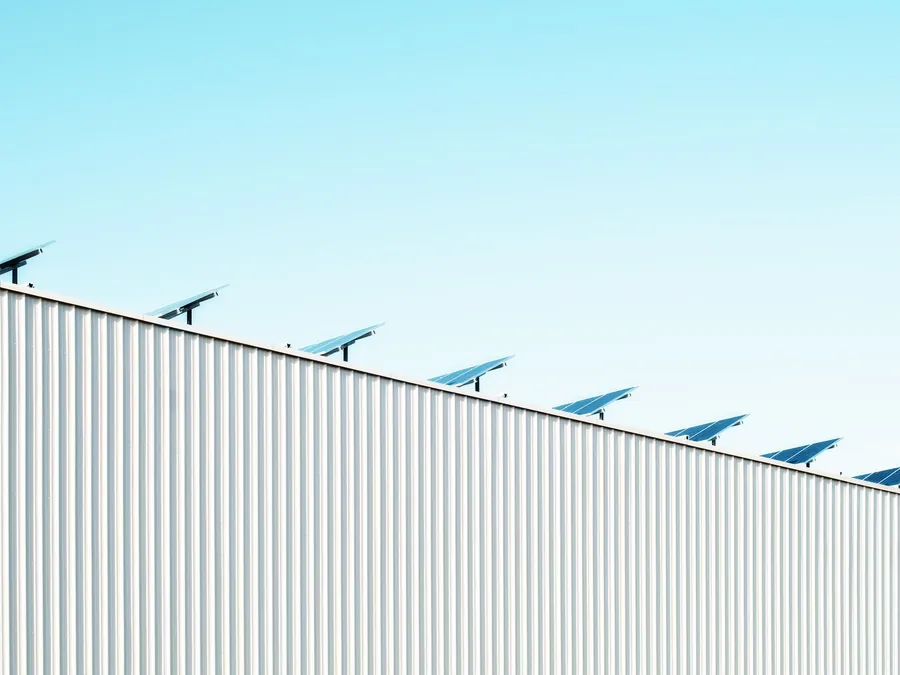
Do You Need Planning Permission For Commercial Solar In Greater Manchester?
Planning permission for commercial solar in Greater Manchester: Class J roof rules, conservation areas, ground mounts, carports, batteries and councils.
What commercial solar costs in Manchester
Government figures for 2025/26 put the average cost of a 10-50kW installation on a non-domestic building at about £1,167 per kW, including connection. In the North West, across all 10-50kW installs, the average was about £1,248 per kW. Larger systems usually cost less per kW, but there's no official figure above 50kW. Roof work, access and grid conditions move the price more than panel choice does.
Commercial solar in Manchester: the questions finance directors ask
How big a solar system does a Manchester business need?
It depends on how much electricity you use in daylight, not on how big the roof is. We look at your half-hourly data and size the array so most of what it makes is used on site. On a busy single-shift factory that might mean covering most of the roof. On a lightly used warehouse it might be a third of it, with the rest kept free unless a battery or a decent export rate changes the sums.
Do commercial solar panels need planning permission in Manchester?
Usually not for roofs. Solar on non-domestic roofs is permitted development with no size cap since December 2023, provided panels stay at least 1m from the roof edge and within 0.2m of a pitched roof or 1m above a flat one. Arrays over 50kW need prior approval from the council on appearance and glare. Listed buildings need full consent, and we check conservation areas such as Ancoats and Castlefield case by case with Manchester City Council.
Will the DNO let us connect?
Almost any commercial system needs a G99 application to SP Electricity North West, the network operator for Greater Manchester. The answer might be a straightforward connection, an export limit, or a quote for network work. We submit the application early, because the response can change the design, and we tell you what it says before you commit.
What tax relief is there on commercial solar?
HMRC treats solar panels as special rate plant. A company can claim the 50% first-year allowance for special rate assets, and most businesses can use the £1m Annual Investment Allowance instead, which usually works out better. Your accountant should confirm how it applies to you, especially for any battery.
Will a supplier pay us for exported power?
Often, but don't assume it. Only suppliers with 150,000 or more domestic customers have to offer the Smart Export Guarantee, so some business suppliers don't. Rates and terms vary, and exports must be measured by a half-hourly export meter. We'd rather size a system to use its own power than rely on export income.
Our roof is old fibre-cement sheeting. Can it take panels?
Sometimes, but it needs checking first. HSE treats fibre-cement roofs as fragile and they're a leading cause of fatal falls, and older sheets may contain asbestos. The usual answers are over-cladding or re-roofing before any panels go on. If that's the case for your building, we'll show the roof cost separately so you can see what the solar itself costs.
Commercial solar across Greater Manchester
Manchester itself is the main patch, especially the industrial belts in the east, the airport side and the wholesale streets north of the centre. From Trafford Park we also cover Salford's western logistics sites and the mill towns and motorway estates of Bolton and Wigan.
Commercial Solar Trafford Park
Roughly 1 mile from Trafford Park
Commercial Solar Salford
Roughly 3 miles from Trafford Park
Commercial Solar Cheetham Hill
Roughly 5 miles from Trafford Park
Commercial Solar East Manchester
Roughly 6 miles from Trafford Park
Commercial Solar Wythenshawe
Roughly 8 miles from Trafford Park
Commercial Solar Leigh
Roughly 13 miles from Trafford Park
Commercial Solar Westhoughton
Roughly 14 miles from Trafford Park
Commercial Solar Bolton
Roughly 14 miles from Trafford Park
Commercial Solar Horwich
Roughly 18 miles from Trafford Park
Commercial Solar Wigan
Roughly 19 miles from Trafford Park
Every area we cover from Trafford Park
- Manchester
- Trafford Park
- Salford
- Cheetham Hill
- East Manchester
- Wythenshawe
- Leigh
- Westhoughton
- Bolton
- Horwich
- Wigan
Find out what your roof could save
Send us a year of half-hourly data or a recent bill and we'll come back with a written proposal for your site. If solar doesn't stack up for your building, we'll say so.