Commercial Battery Storage In Westhoughton

Would a battery actually pay back on a Westhoughton unit your size?

Battery storage sized for smaller commercial roofs, workshops and farms around Westhoughton

Battery storage is easier to justify on a big factory than on a small unit, and Westhoughton has far more of the second. That does not rule it out. A firm on Wingates Industrial Estate running a 30 or 40 kW array will usually find its roof producing more than it can use at weekends and on bright summer middays, and a modest battery can carry that surplus into the next working morning or the weekday 4pm to 7pm peak. Whether it pays depends on what your tariff charges at those times, which varies much more for smaller businesses than for half-hourly metered sites. Storage up to 50 kW also comes under MCS's battery standard, MIS 3012. We run the numbers both ways and tell you if the panels on their own are the better buy.

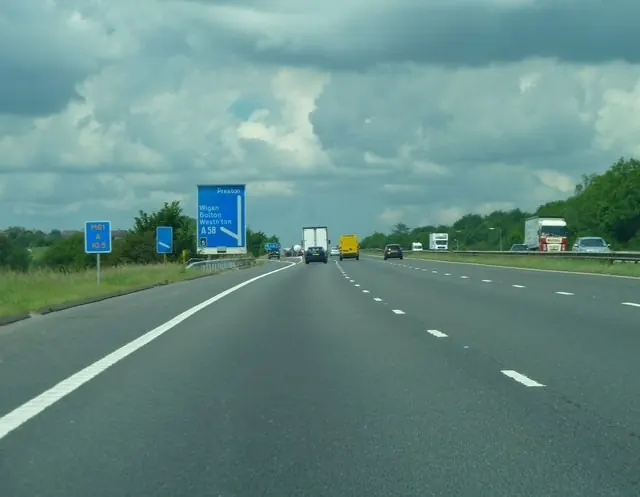
Lorries on the M61 near Chequerbent, Westhoughton, approaching junction 5
Photo: Andy Farrington, Wikimedia Commons, CC BY-SA 2.0

Battery Storage Survey In Westhoughton

We reply within one working day to book a site visit.

No charge for the survey or the proposal. Your details are only used to reply to you - see the privacy policy.

Commercial Battery Storage · Westhoughton

What storage can do for a smaller Westhoughton site

The benefits are real but smaller in absolute terms, so each one has to earn its place in the payback sum.

01

Weekend generation used on Monday

A unit closed on Saturday and Sunday exports two days of solar for whatever its supplier offers. Business-focused suppliers do not have to provide the Smart Export Guarantee, so that rate can be low. A battery holds part of the weekend output and releases it when the machines start up again.

02

Late-afternoon peaks trimmed

SP Electricity North West's weekday red band runs from 4pm to 7pm all year. Smaller sites on aggregated tariffs see red-band distribution rates many times the amber rate, and a battery discharging in those hours takes the edge off a cost that is easy to miss on a small-business bill.

03

A fuller winter day

In December a Greater Manchester roof makes around a quarter of its June output per kW. Storage cannot fix that, but a battery charged overnight on a cheaper rate can still cut daytime import in winter, provided your supplier offers a time-of-use tariff worth exploiting.

04

Fits on a wall or in a cabinet

At this scale a battery is usually a wall-mounted or floor-standing cabinet rather than a container. It can often go inside the unit near the main board, which saves on groundworks, as long as the spot meets fire separation and access requirements.

05

Farm loads that run into the evening

Milking equipment, cooling tanks and workshop tools on a farm do not always line up with sunshine. A battery charged from a ground array or barn roof can cover an evening milking, for example, where the farm's routine puts it in the red band.

06

No extra on the rates demand

Storage used with on-site renewables is exempt from business rates in England until March 2035, so a battery on a rated Westhoughton unit does not add to the bill. A battery charged only from the grid may not qualify, which is one reason we design around your solar.

£0

Site survey and a review of your half-hourly data

kWh

Systems sized from your own meter readings

G99

Grid application drawn up and submitted for you

M17

Based on Trafford Wharf Road, Trafford Park

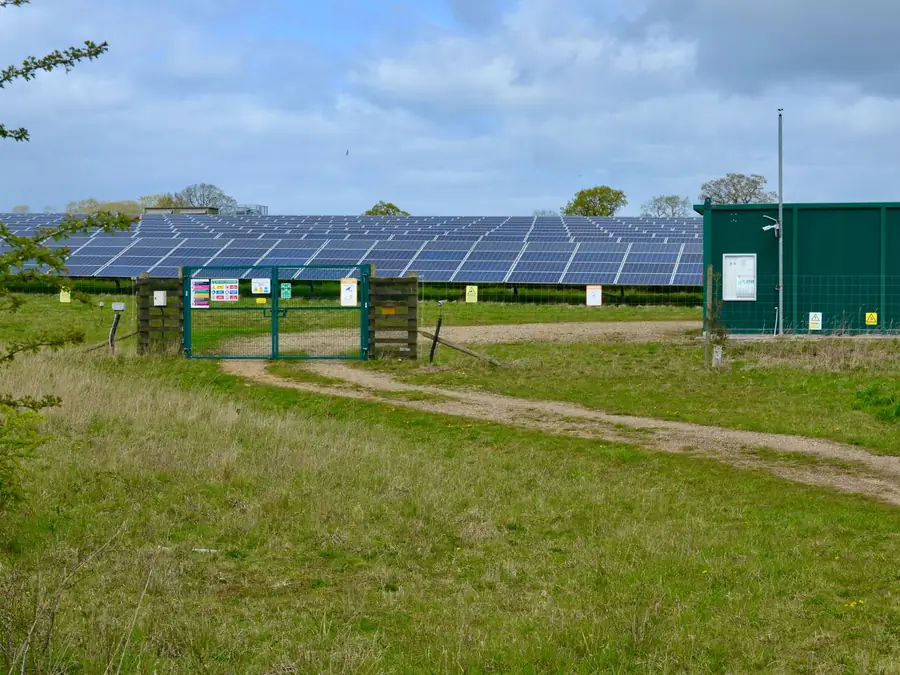
Rows of ground-mounted solar panels on a grassed site with a green substation kiosk and access track
Westhoughton

Small roofs, farm buildings and the M61 corridor

Westhoughton's commercial property is mostly modest in scale. Units on Wingates, at Mango Park and around Chequerbent are often occupied by a single owner-managed firm on a single supply, which makes the electrical design simpler than in a multi-tenant mill. It also means there is usually no facilities manager, so the battery has to run unsupervised, report clearly and be easy to isolate. We set the controls conservatively and give you a monitoring view a director can read in a minute.

Out towards Hindley and Over Hulton, farm buildings bring different conditions: dust, livestock, damp and long cable runs between the yard and the field. A battery on a farm needs a dry, ventilated, secure location away from straw and fuel stores, and the inverter has to suit the farm's supply, which may be single-phase. Bolton Council remains the planning authority for any new external enclosure, and there is no permitted development class for battery storage.

A battery only pays with generation to fill it, so start with our page on commercial solar panels in Westhoughton, which covers roof systems, farm arrays and benchmark prices.

"Most of the small Westhoughton firms we're asked to look at are surprised that we sometimes advise leaving the battery out and putting the money into a few more panels instead."
Based on battery storage enquiries handled by Commercial Solar Manchester around Westhoughton
The install

Adding a battery in Westhoughton: how it goes

  1. 1

    Check the tariff first

    A battery's value rests on the gap between your cheap and expensive rates. We read your bills and supply contract before modelling anything, because a small business on a flat single-rate tariff gets far less from storage than one with peak and off-peak pricing.

  2. 2

    Size it modestly

    We model weekday and weekend use against the array's generation and pick the smallest battery that captures most of the surplus. Oversizing is the usual mistake at this scale, and the proposal shows the extra saving each additional kWh would bring.

  3. 3

    Paperwork for the network and the insurer

    Storage counts as generation, so the G99 application to SP Electricity North West includes it, or is updated if you already have panels. We send your insurer the battery location, fire separation and isolation arrangements before the installation date.

  4. 4

    Prepare the spot

    Indoors, that means a non-combustible wall or plinth, the right clearances and a cable route to the main board. On a farm or an outside wall it means a weatherproof enclosure, protection from vehicles and livestock, and a lockable isolator.

  5. 5

    Fit and wire

    The battery, its inverter and two-way protection are installed and connected, followed by the meter that lets the controller see your import. On a smaller unit the disruption is limited to a short power-down agreed with you in advance.

  6. 6

    Test and set the controls

    We run charge and discharge tests, prove the emergency shutdown and set the control mode, usually self-consumption with a red-band discharge window. After a few weeks of real data we check the battery is cycling the way the model expected.

  7. 7

    Show you how to live with it

    You get the commissioning certificate, warranty registration, an app login and a one-page sheet for whoever opens up in the morning: what normal looks like, what an alarm means and how to isolate the system safely.

Guarantees and warranties

Who answers for your Westhoughton installation, and for how long

There are two layers of cover on a commercial installation, and it pays to know which is which. The first is the installer's workmanship guarantee. It covers the way the system was put in: the fixings through your roof, the cable runs, the terminations, the protective devices and the commissioning settings. Its length and terms are written into the quotation, so you can read them before you sign rather than discover them afterwards.

The second layer belongs to the manufacturers. Panels normally carry a product warranty and a separate performance warranty, which promises a minimum output after a set number of years. Inverters and batteries have their own terms, often with cycle or throughput limits on storage. These vary by product, so every proposal names the exact models and attaches their warranty documents.

A guarantee is only as good as the install underneath it. That's why the structural check comes before the design is fixed, why every string is tested and recorded to BS 7671, and why the grid connection is commissioned to the settings SP Electricity North West has approved. If something we fitted fails because of how it was fitted, we come back and put it right.

In writing

Workmanship guarantee, set out in your quote

Per model

Manufacturer product and performance warranties

Test results, drawings, warranty certificates and the grid connection agreement are handed over in one pack on the last day.

Panels alone or panels plus storage in Westhoughton

For a small Westhoughton roof the real comparison is often between spending on a battery and spending on more panels. The table shows how the options differ; your own figures decide between them.

Comparison point Solar onlySolar + batteryBattery on its own (tariff shifting)
Solar used on site Only what the load takes at the timeHigher: surplus stored for laterNo solar involved
Red-band (16:00-19:00) costs Little effect, almost none in winterCut with stored solar or overnight chargeCut with overnight green-band charge
kVA capacity charges No reliable effectPeaks can be shavedPeaks can be shaved
DNO export limit Surplus above the cap is lostSurplus stored instead of clippedCap applies to battery discharge too
Backup in a power cut None as standardOnly if designed for itOnly if designed for it
Planning and permissions G99; roof usually permitted developmentG99; roof PD plus a siting and fire reviewG99; no PD class, so take planning advice

What sets the price of a small battery in Westhoughton

No official per-kWh benchmark exists for commercial storage, so we will not quote one. The price for your site comes down to these.

Single-phase or three-phase

Some smaller units and farms run on a single-phase supply, which limits inverter choice and battery power. Three-phase units on Wingates have more options. The G98 threshold is 16 A per phase, so even a small battery often needs a G99 application.

Indoor or outdoor

Fitting a cabinet indoors beside the main board at a Mango Park or Chequerbent unit is usually the cheaper route. A farm installation, with a weatherproof enclosure, groundworks and a long cable run from a barn, costs more for the same storage.

Adding to existing panels

If your array is already running, a battery may need its own inverter and an updated connection agreement. Retrofitting is common and straightforward, but it costs more than designing storage in from the start.

Warranty and cycle life

Manufacturers warrant batteries for a set number of years or cycles, whichever comes first, with a minimum capacity at the end. A battery cycled daily uses that allowance faster, so we compare warranties against how hard your site would work it.

Read the full solar and battery cost guide

Battery storage in Westhoughton: common questions

Will a battery cope in an unheated farm building?

Lithium batteries lose usable capacity in the cold and should not be charged below the manufacturer's minimum temperature. In an unheated barn or store on the edge of Westhoughton we would specify an enclosure with temperature management, or find a frost-free spot closer to the farm office or workshop.

Is a battery worth adding to a 40 kW array on a Westhoughton unit?

Sometimes. If you work five days a week and export a lot at weekends, or your tariff has a high peak rate, storage can pay. If you run six or seven days and already use nearly all your generation, it rarely does. We model both and show you the difference in pounds.

Does a battery need planning permission?

An external enclosure may. There is no permitted development class for battery storage, so we check with Bolton Council before installing anything outside. A cabinet fitted inside an existing unit is generally less of a planning question, though we still confirm it for each site.

Can a battery give us backup during a power cut?

Only if it is designed to. Most grid-tied systems shut down when the grid fails, to protect anyone working on the network. Backup needs extra switchgear to separate your chosen circuits and adds cost, so tell us early if a freezer, alarm or server must stay on.

Does the MCS battery standard apply to us?

MCS's MIS 3012 covers battery storage in permanent buildings up to 50 kW maximum output, which takes in the size of battery most smaller units would consider. Larger systems sit outside MCS and are designed to BS 7671 and the IET Code of Practice instead. We tell you which applies to your design.

Away from the plant room

What to do in Westhoughton

Westhoughton on the map

Reviews

What Westhoughton businesses say about us

We're a new name, so you won't find a wall of reviews here yet. We'd rather show you nothing than make some up.

For a project this size, reviews were never the best evidence anyway. Ask any installer you're considering for a reference site you can visit, a year or more of generation data from a system they fitted, and the grid connection paperwork from a past job. If they can't produce those, keep looking.

Ask us whether storage makes sense for you

Send your bills, your tariff details and, if you have one, your current solar output. You will get a straight yes or no on a battery.