Commercial Solar Panels In Westhoughton

Is your Westhoughton unit the right size for solar to pay its way?

Rooftop and ground-mounted solar for owner-run businesses on Wingates, around Chequerbent and on farms at the edge of the township

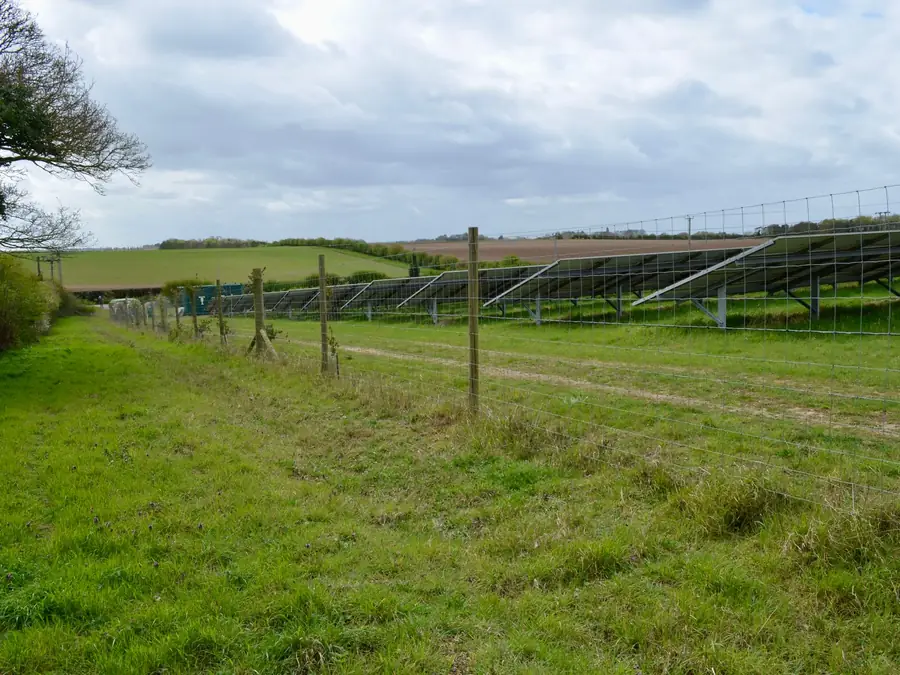
A lot of the businesses weighing up commercial solar panels in Westhoughton are not running distribution sheds. They are owner-managed firms in units on Wingates Industrial Estate, at Mango Park or around Chequerbent, with roofs that would take somewhere between 20 and 60 kW of panels. That size is useful, because it is the one band where official cost data exists. DESNZ figures for 2025/26 put 10-50 kW installations in the North West at a mean of £1,248 per kW, so you can sanity-check a quote before taking it further. Systems up to 50 kW also count as microgeneration under the permitted development rules, and fall within the MCS scheme that the Smart Export Guarantee relies on. Around the edge of the township there are farms with land as well as roofs, and we cover ground-mounted arrays for them too.

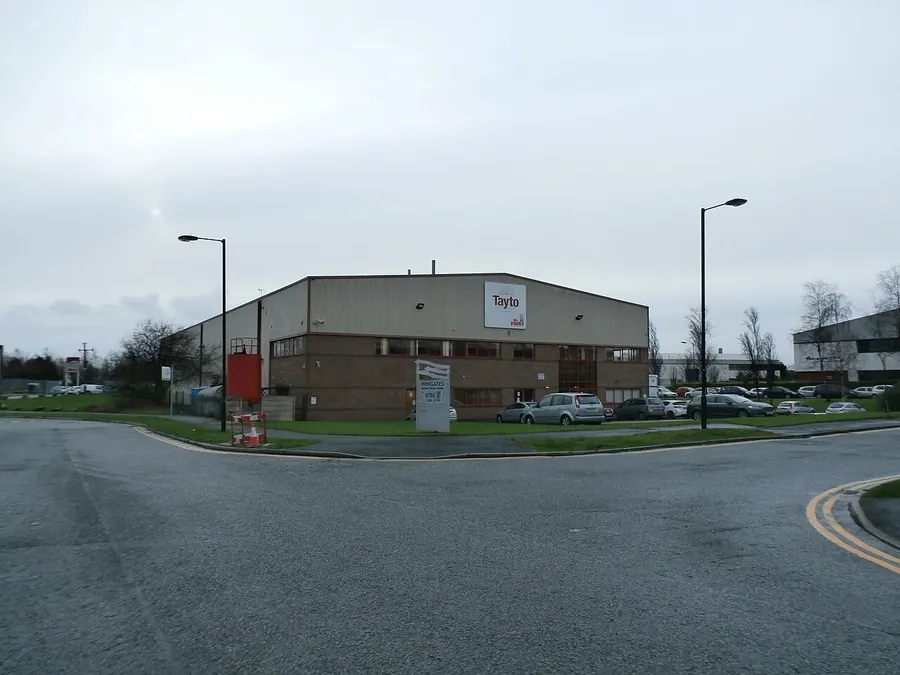
Factory and warehouse units on Wingates Industrial Estate, Westhoughton
Photo: Anthony Parkes, Wikimedia Commons, CC BY-SA 2.0

Free Solar Survey In Westhoughton

We reply within one working day to book a site visit.

No charge for the survey or the proposal. Your details are only used to reply to you - see the privacy policy.

About Westhoughton

Wingates, Chequerbent and the land around them

Westhoughton's employment land follows the A6 Chorley Road and runs down to junction 5 of the M61 at Chequerbent, where the A58 Snydale Way meets the motorway. Wingates Industrial Estate lies south of the A6, a mix of factory units, trade counters and smaller workshops; Mango Park is one of the more modern clusters within it. Off Great Bank Road, the old Bernstein kitchen factory site, cleared in 2011 after a fire, has had plans lodged for around 360,000 sq ft of new units. Bolton Council's West of Wingates masterplan allocates a far larger area, with Harworth developing the first consented phase off a new A6 access.

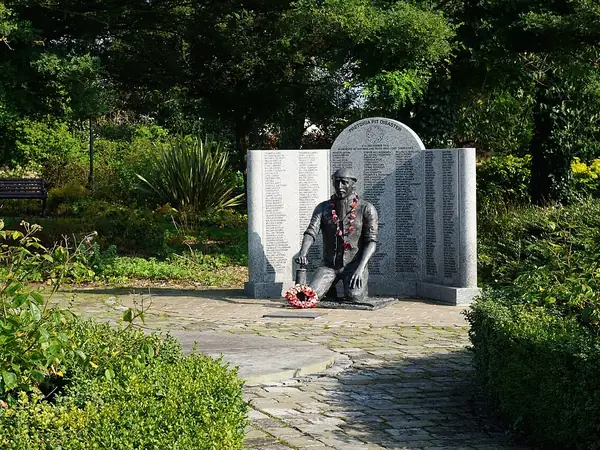
The town's working history is coal as much as cotton. The Pretoria Pit disaster at Hulton Colliery on 21 December 1910 killed 344 men and boys, and the memorial still stands. Beyond the estates, Westhoughton gives way to farmland towards Hindley, Over Hulton and Blackrod, and Bolton borough had 85 farms in the 2026 Nomis count. Farm buildings and pasture give their owners a choice between roof-mounted and ground-mounted arrays that a business on Wingates does not have. Logistics North is only two or three miles east, but the usual Westhoughton building is a smaller roof run by the person who signs the cheque.

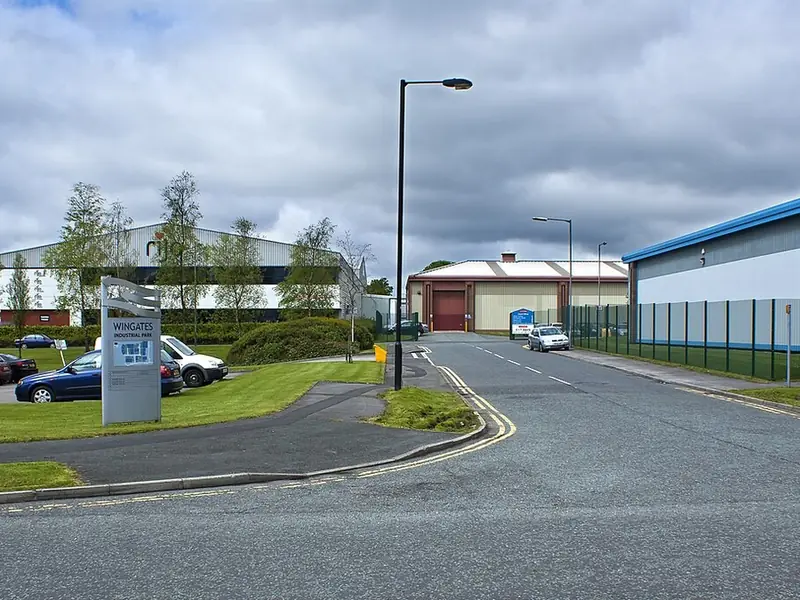
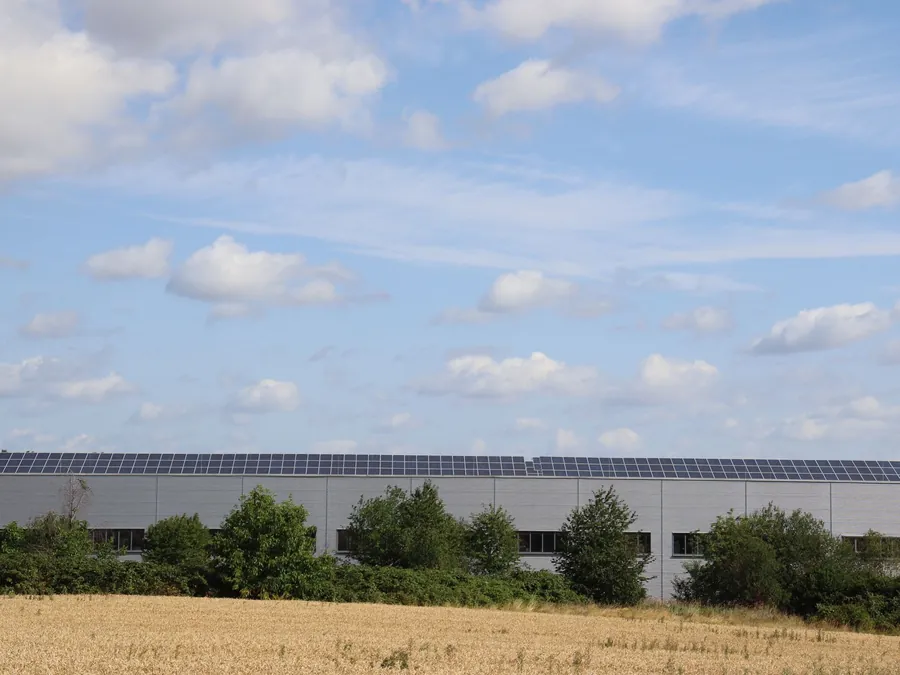
Modern industrial units at Mango Park on Wingates Industrial Estate, Westhoughton
Photo: Ian Greig, Wikimedia Commons, CC BY-SA 2.0

£0

Site survey and a review of your half-hourly data

kWh

Systems sized from your own meter readings

G99

Grid application drawn up and submitted for you

M17

Based on Trafford Wharf Road, Trafford Park

Our work in Westhoughton

Solar and storage for Westhoughton premises

What solar does for a smaller Westhoughton business

Owner-managers tend to ask sharper questions about payback than finance departments do. These are the points that usually settle them.

Your unit price is the high one

Small businesses pay more per unit than large ones. DESNZ data for the second quarter of 2026 puts the very smallest business users at 38.4p per kWh and the next band up, 20 to 499 MWh a year, at 28.6p, both including the Climate Change Levy. Every kWh your roof supplies directly is worth that rate to you.

A price you can benchmark

Above 50 kW there is no official price data, but below it there is. DESNZ records a North West mean of £1,248 per kW for 10-50 kW installations in 2025/26, and £1,167 per kW for non-domestic installations nationally. If a quote for your Wingates unit sits well above those, it is fair to ask why.

Planning is usually simple

A rooftop array of up to 50 kW on a non-domestic building is microgeneration under Class J permitted development, with no prior approval needed provided it keeps 1 m back from the roof edge and within the height limits. Westhoughton town centre is a conservation area, but the industrial estates sit outside it.

Allowances that suit owner-managed firms

The £1 million Annual Investment Allowance covers most plant and machinery and is often the simplest route for a system of this size. Solar counts as special rate expenditure, so the way the claim is structured matters, and a short conversation with your accountant before the order is placed is time well spent.

Export income needs the right paperwork

To earn Smart Export Guarantee payments, a system up to 50 kW needs both installation and installer certification under MCS or an equivalent scheme, plus a meter that records export half-hourly. We confirm the certification route in the proposal, so the export side is settled before installation rather than discovered afterwards.

Farmland gives a second option

For a farm business, a south-facing ground array avoids loading old barn roofs and can sit at the ideal tilt, which PVGIS puts at around 40 degrees for Greater Manchester. Ground-mounting needs planning permission once it goes beyond the small stand-alone allowance, so it suits a farm with a field to spare and some patience for the application.

"Most of the Westhoughton owners we're asked to look at already hold a quote from somewhere else and mainly want to know whether the price per kW is reasonable before they sign."
Based on enquiries handled by Commercial Solar Manchester in and around Westhoughton
Guarantees and warranties

Who answers for your Westhoughton installation, and for how long

There are two layers of cover on a commercial installation, and it pays to know which is which. The first is the installer's workmanship guarantee. It covers the way the system was put in: the fixings through your roof, the cable runs, the terminations, the protective devices and the commissioning settings. Its length and terms are written into the quotation, so you can read them before you sign rather than discover them afterwards.

The second layer belongs to the manufacturers. Panels normally carry a product warranty and a separate performance warranty, which promises a minimum output after a set number of years. Inverters and batteries have their own terms, often with cycle or throughput limits on storage. These vary by product, so every proposal names the exact models and attaches their warranty documents.

A guarantee is only as good as the install underneath it. That's why the structural check comes before the design is fixed, why every string is tested and recorded to BS 7671, and why the grid connection is commissioned to the settings SP Electricity North West has approved. If something we fitted fails because of how it was fitted, we come back and put it right.

In writing

Workmanship guarantee, set out in your quote

Per model

Manufacturer product and performance warranties

Test results, drawings, warranty certificates and the grid connection agreement are handed over in one pack on the last day.

Step by step

Getting solar onto a Westhoughton roof: our seven steps

  1. 1

    Bills, data and a roof photo

    For a smaller unit we can often start from twelve months of bills and a smart meter download rather than a full half-hourly history. A few photos of the roof and the electrical intake let us rule out the obvious problems before we visit.

  2. 2

    A proposal in plain numbers

    You get the system size in kW, expected annual generation, how much of it you will use, the price, and a payback figure with its assumptions written beside it. If a battery does not improve the result, the proposal says so.

  3. 3

    Roof check and the connection form

    A structural check confirms the purlins and sheeting will carry the array. For a three-phase supply up to 50 kW, the G99 application to SP Electricity North West uses the shorter Form A1-1; above that it moves to the full standard application.

  4. 4

    Access off a shared estate road

    Units on an estate like Wingates often share yards and access roads with neighbours. We book scaffold or a mobile elevating platform for fixed days, let the adjoining occupiers know, and keep the entrance clear for their deliveries as well as yours.

  5. 5

    Fitting the array

    Rails are fixed to the purlins through the sheeting with sealed brackets, panels clamped on, and cables taken through a single sealed entry to the inverter. On a farm ground-mount, piled or ballasted frames go in first, followed by the cable trench back to the farm's supply point.

  6. 6

    Testing before switch-on

    Strings are tested for polarity, insulation resistance and voltage, and the inverter protection is checked against the network's requirements. We switch on only once the G99 conditions are satisfied, and record the results on the commissioning certificate.

  7. 7

    Handing it over

    You get certificates, warranty documents and an app showing generation by the hour. We show you where the isolators are, what a fault looks like on the monitoring and what to tell your insurer, then leave you to run it.

Away from the plant room

What to do in Westhoughton

Westhoughton on the map

Reviews

What Westhoughton businesses say about us

We're a new name, so you won't find a wall of reviews here yet. We'd rather show you nothing than make some up.

For a project this size, reviews were never the best evidence anyway. Ask any installer you're considering for a reference site you can visit, a year or more of generation data from a system they fitted, and the grid connection paperwork from a past job. If they can't produce those, keep looking.

What solar costs for a Westhoughton business

Westhoughton is the one area where we can point to official numbers. DESNZ data for 2025/26 gives a North West mean of £1,248 per kW for 10-50 kW systems, so a 40 kW array on a Wingates unit comes to roughly £48,000 to £50,000 as a rough guide. Your own figure moves with roof condition, scaffold access, where the inverter goes, the distance to your main board and whether the sheeting needs work first. Ground-mounted farm arrays add frames, trenching and planning fees.

Every quote

Fixed price

Solar & battery cost guide

Commercial solar in Westhoughton: questions we get asked

Do we need planning permission for panels on our unit?

Usually not. Rooftop solar up to 50 kW on a non-domestic building is microgeneration under Class J of the permitted development rules, provided it stays 1 m from the roof edge and within the height limits. Bolton Council is the planning authority. A ground-mounted array bigger than a single stand-alone unit of 9 m² needs a full application.

Is a 30 kW system worth it for a Westhoughton workshop?

It can be, if the workshop uses most of the power during the day. At 2026 small-business prices each self-used kWh is worth roughly 28p or more, and a south-facing roof in Greater Manchester generates around 900 kWh per kW installed each year. Weekend output and unused summer surplus lower the return, which is why we model your actual usage rather than quote a general payback.

Can solar go on a farm building or field near Westhoughton?

Both are possible. Barn roofs need a structural check, and older fibre-cement roofs are treated as fragile, so they may need replacing first. A field array avoids that, but needs planning permission and a cable route back to the farm's electricity supply. Livestock can usually still graze between the rows.

How long until the system is generating?

The network process is usually the longest stage. For low-voltage generation, SP Electricity North West has 45 working days to provide a quotation under the guaranteed standards. Structural checks and scaffold booking run alongside it, so the roof work itself is rarely what holds things up.

Get your Westhoughton quote checked or priced

Send us your last year of bills and a photo of the roof. If you already have a quote, send that too and we will tell you how it compares.