
Commercial Battery Storage In Manchester
Are you paying peak rates between four and seven every weekday?
Battery energy storage for factories, warehouses and farms on the SP Electricity North West network, with or without solar
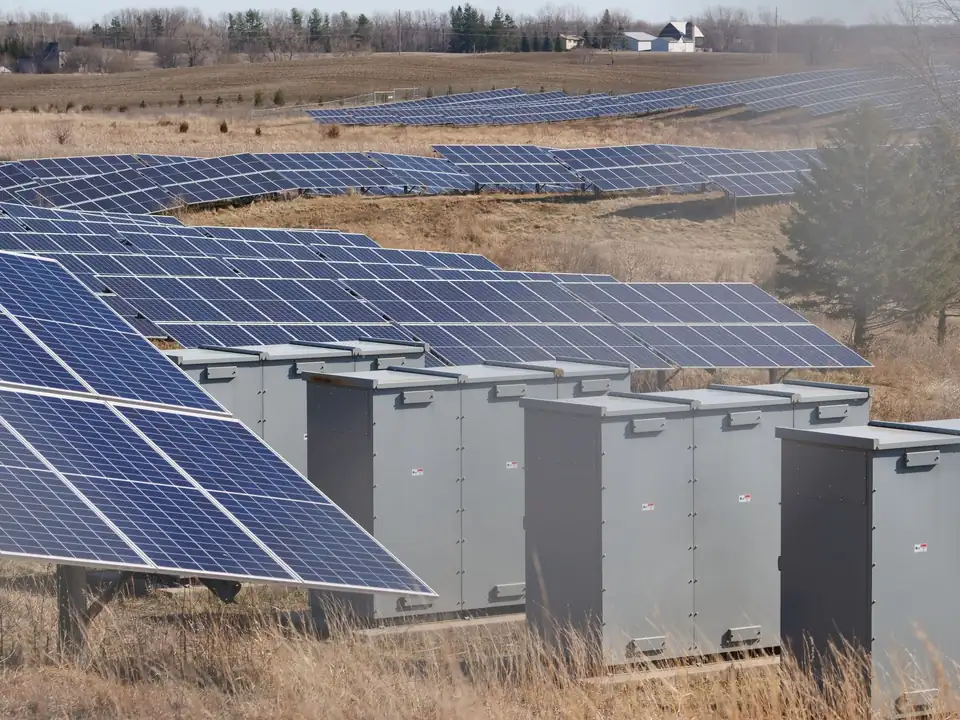
Commercial battery storage in Manchester makes its money from timing. SP Electricity North West's distribution charges have a red band from 16:00 to 19:00 every weekday, all year round, and in the 2026/27 charging statement the red rate for smaller half-hourly business sites works out at six to ten times the amber rate. A battery charged from midday solar or cheap overnight power, then discharged across those three hours, keeps the dearest units off your bill. It can also trim demand spikes before they breach the supply capacity you've agreed with the network. And it stores solar that would otherwise go back to the grid at a low export price or be lost to an export limit. We size the battery from your half-hourly data and your supply contract. Some profiles don't justify one, and we'll show you the arithmetic when that's the case.
Ask For A Battery Storage Assessment
We reply within one working day to book a site visit.
Where a commercial battery saves money, line by line
A battery is a cost-shifting machine. These are the charges it can move, and the conditions that decide whether it moves enough of them to pay back.
01
Red-band units bought at green-band prices
Charge between midnight and 09:00 or from surplus solar, discharge between 16:00 and 19:00, and the units you'd have bought at the red distribution rate come from storage instead. How much of that reaches your bill depends on how your supply contract passes network charges through. We read the contract before we model anything. A fixed all-in unit rate can hide the red band entirely.
02
Staying inside your agreed capacity
Half-hourly sites pay a daily charge for their agreed supply capacity in kVA. Go over it and the excess is charged for the whole billing period, not just the half hour it happened. A battery can cover a compressor start-up or a morning surge so the meter never sees the spike. It's often cheaper than raising your capacity, which can only be reduced again once in twelve months.
03
More of your own solar used on site
Solar arrays on Greater Manchester sheds often overproduce at lunchtime and on weekends, when the building is quiet. Without storage that surplus is exported at a fraction of your import price. If the network operator has capped your export, the surplus is simply clipped and wasted. A battery soaks it up and releases it later in the day, when the site would otherwise be buying from the grid.
04
Room for new load without a bigger connection
Adding EV charging for a van fleet, or a new production line, can push a site past its import capacity. Upgrading the connection may mean a reinforcement charge and a long wait. A battery that tops up overnight and supports the peak can let the new load run within the capacity you already have. We model that against your data before anyone talks to the network operator about upgrades.
05
No business rates on storage used with renewables
The English rates exemption that runs to 31 March 2035 covers storage used with onsite renewable generation, and the government's own example is rooftop solar paired with a battery. A battery used purely to trade grid power isn't obviously covered, so pairing with solar matters here. VAT is charged at 20% on commercial installs and is normally reclaimable if you're VAT-registered.
06
Backup power, if you specify it
A standard grid-tied battery shuts down with the grid during a power cut, like the solar inverters do. Keeping selected circuits running, such as servers, cold storage controls or security, needs a system designed to island safely from the network, with the right changeover equipment. It costs more and has to be declared in the G99 application, so we only include it where an outage would genuinely cost you money.
£0
Site survey and a review of your half-hourly data
kWh
Systems sized from your own meter readings
G99
Grid application drawn up and submitted for you
M17
Based on Trafford Wharf Road, Trafford Park
Why storage suits so many Greater Manchester sites
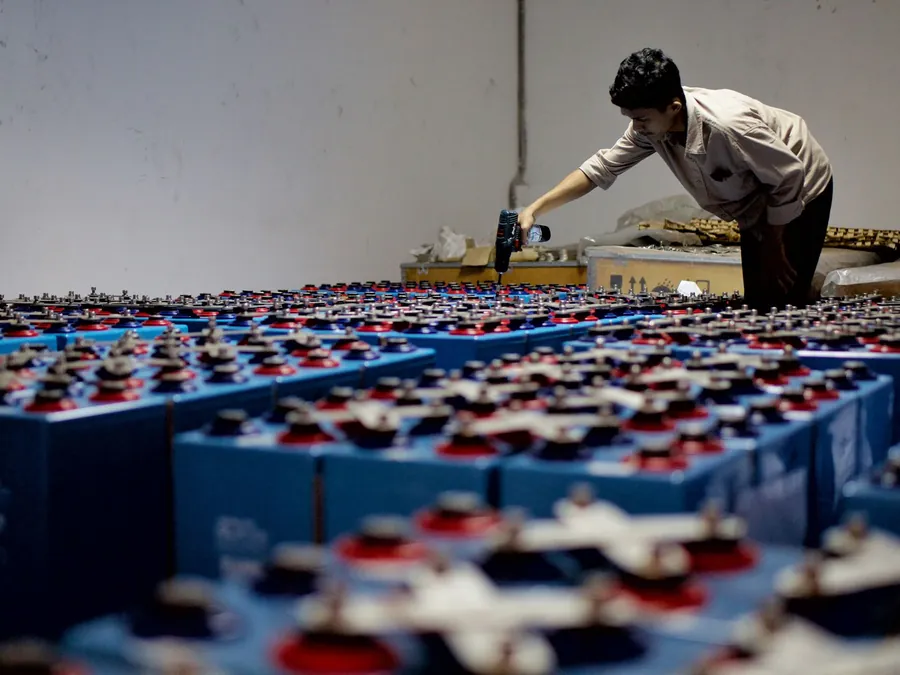
Solar output here swings hard with the seasons. PVGIS shows an array in Trafford Park making about 3.8 times as much from May to July as it does in December. In summer a battery fills from surplus solar most days. In winter there's little surplus, so it charges from overnight green-band power instead. The red band never takes a season off, so the battery has a job twelve months a year, which is what makes the numbers work.
Load profiles across the region tend to suit storage well. Two-shift manufacturers in Bolton and Wigan run straight through the 16:00-19:00 window, and distribution sheds at Port Salford and Logistics North can be loading trailers well into the evening. On a congested stretch of the SP Electricity North West network, where export from a new array may be capped, storage is often what makes a full-size roof worthwhile at all.
Siting needs thought. An older mill may have a spare plant room with good fire separation, while a modern logistics shed usually means an outdoor cabinet or container on a concrete base in the yard. For systems of 1 MWh or more, national planning guidance encourages you to talk to the fire and rescue service before applying.
"Most of the battery enquiries we look at begin as a question about wasted solar export, and the half-hourly data usually shows the bigger saving is in the four-to-seven peak."
From load profile to a working battery: how we run a storage project in Manchester
- 1
Review the load profile and the tariff
Twelve months of half-hourly data shows how much you buy in the red band, how close you run to your agreed capacity and when the peaks happen. We read your supply contract alongside it, because pass-through or fixed pricing decides which savings are real and which only exist on paper.
- 2
Size the battery and set out the case in writing
Power (kW) and capacity (kWh) are sized separately: one sets how hard the battery can cut a peak, the other how long it can keep going. The proposal shows the dispatch strategy, expected cycles per year and the saving from each charge it moves, with the assumptions listed so your finance team can test them.
- 3
Agree the location, fire strategy and G99 application
We agree where the battery goes, how it's ventilated and separated, and how firefighters would get to it, following the IET Code of Practice for energy storage and the National Fire Chiefs Council guidance. Your insurer is briefed. Batteries count as generation, so a G99 application goes to SP Electricity North West.
- 4
Prepare the base, protection and cable routes
Outdoor units need a level concrete plinth, and in a busy yard that means impact barriers against forklifts and HGVs. Inside, we check floor loading and access for delivery. Cable routes back to the main switchboard are planned so they don't block loading bays or fire exits.
- 5
Install the battery and power conversion system
Battery cabinets or racks go in, then the power conversion system or hybrid inverter that turns stored DC into usable AC. Protective devices are rated for current flowing both ways, in line with the battery chapter added to BS 7671 in 2026. CT metering at the incomer lets the controller see the whole site's demand.
- 6
Commission, test the controls and notify the DNO
We test the protection settings, the charge and discharge limits, any export cap agreed under G100 and, if specified, the backup changeover. Then the battery runs through a full charge and discharge cycle under its control strategy before commissioning records go to SP Electricity North West.
- 7
Hand over the dispatch settings and review the first bills
You get a monitoring login, the O&M file and a plain-English note of when the battery charges and discharges, and why. After the first full quarter we check the strategy against your actual bills, because a change in shift pattern or tariff can mean the settings need adjusting.
Who answers for your Manchester installation, and for how long
There are two layers of cover on a commercial installation, and it pays to know which is which. The first is the installer's workmanship guarantee. It covers the way the system was put in: the fixings through your roof, the cable runs, the terminations, the protective devices and the commissioning settings. Its length and terms are written into the quotation, so you can read them before you sign rather than discover them afterwards.
The second layer belongs to the manufacturers. Panels normally carry a product warranty and a separate performance warranty, which promises a minimum output after a set number of years. Inverters and batteries have their own terms, often with cycle or throughput limits on storage. These vary by product, so every proposal names the exact models and attaches their warranty documents.
A guarantee is only as good as the install underneath it. That's why the structural check comes before the design is fixed, why every string is tested and recorded to BS 7671, and why the grid connection is commissioned to the settings SP Electricity North West has approved. If something we fitted fails because of how it was fitted, we come back and put it right.
In writing
Workmanship guarantee, set out in your quote
Per model
Manufacturer product and performance warranties
Test results, drawings, warranty certificates and the grid connection agreement are handed over in one pack on the last day.
What to look for in a commercial battery storage installer
Savings split by where they actually come from
A battery can cut red-band units, capacity charges and wasted solar, and it can let you export at better times. Each of those depends on a different part of your bill and your data. A credible proposal breaks the saving into those parts and shows the half-hourly evidence behind each one. Be wary of a single annual saving figure with no workings, and of anyone who hasn't asked how your supply contract handles network charges. On a fixed all-in rate, the red-band saving may not reach you until the next contract renewal.
A straight answer on fire safety and siting
The IET Code of Practice for Electrical Energy Storage Systems, now in its 2024 third edition, covers commercial and industrial installations and includes guidance on fire safety and battery location. BS 7671 gained a dedicated chapter on stationary batteries in Amendment 4, published in April 2026. PAS 63100, by contrast, is written for batteries in homes. An installer who quotes it for a warehouse has picked up the wrong document. Ask where the battery will sit, how it's separated from the building and what your insurer has been told.
Honesty about the grid, the paperwork and the standards
Batteries need a G99 application just like solar, and storage is exempt from only some of its requirements. The MCS battery standard stops at 50 kW of power output, so most commercial systems fall outside it and the design has to stand on BS 7671, the IET code and the network operator's conditions. A good installer will also tell you that SEG payers don't have to pay for exported power that was charged from the grid, before you build that income into the business case.
Solar only, solar with a battery, or a battery on its own
This is the comparison we take most operations and finance teams through before a battery is priced. It's a general guide. Your half-hourly data and supply contract decide which column comes out ahead.
| Comparison point | Solar only | Solar + battery | Battery on its own (tariff shifting) |
|---|---|---|---|
| Solar used on site | Only what the load takes at the time | Higher: surplus stored for later | No solar involved |
| Red-band (16:00-19:00) costs | Little effect, almost none in winter | Cut with stored solar or overnight charge | Cut with overnight green-band charge |
| kVA capacity charges | No reliable effect | Peaks can be shaved | Peaks can be shaved |
| DNO export limit | Surplus above the cap is lost | Surplus stored instead of clipped | Cap applies to battery discharge too |
| Backup in a power cut | None as standard | Only if designed for it | Only if designed for it |
| Planning and permissions | G99; roof usually permitted development | G99; roof PD plus a siting and fire review | G99; no PD class, so take planning advice |
Adding a battery to solar you already own
Many Greater Manchester sites already have an array that was sized before export limits and red-band charges were on anyone's radar. A battery can usually be connected on the AC side, next to the existing inverters, without touching the panels. The G99 paperwork still has to be updated, because the site's total generation changes.
Before we recommend a retrofit, we pull the monitoring data from the existing array to see how much it actually exports, and when. If the array isn't performing as it should, fixing that first is cheaper than storing less energy than you expected.
See how we approach commercial solar panels in Manchester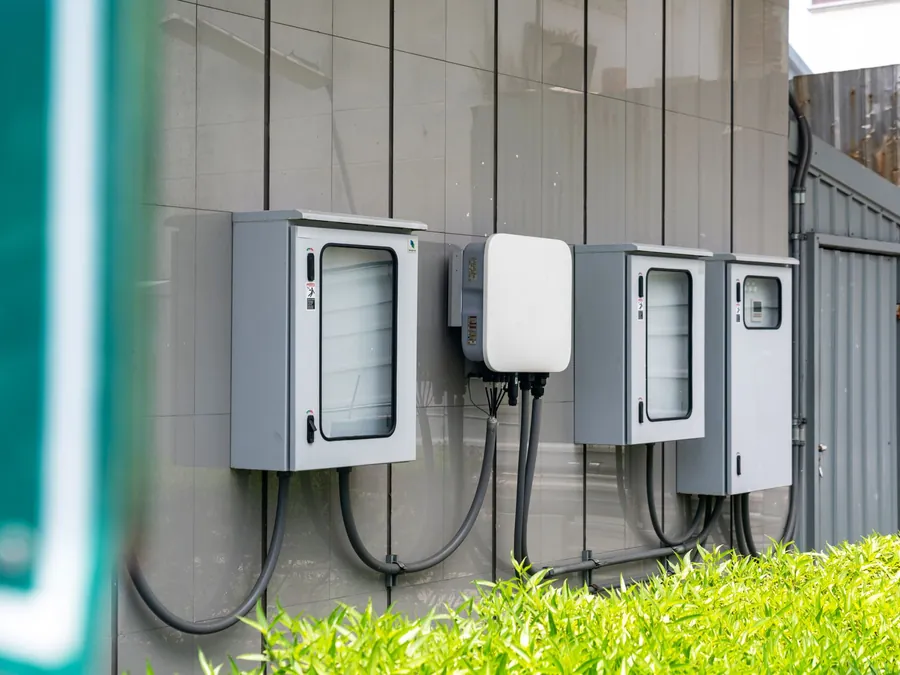
What decides the price of a commercial battery
There's no reliable published price per kWh for commercial batteries, and we won't make one up. The cost is set by the storage capacity in kWh, the power rating of the conversion system in kW, and where the battery goes: a plant room with existing fire separation costs less to prepare than a yard container with a new plinth and barriers. Cable distance to the switchboard, controls, metering and any network conditions add to it. We price after the data review, line by line.
Commercial battery storage in Manchester: questions we're asked before a quote
Does a commercial battery need planning permission?
There's no permitted development class for battery storage in Part 14 of the planning rules, unlike rooftop solar. A battery installed inside an existing building often won't need an application, but that depends on the works involved, and an outdoor container or cabinet compound usually needs advice from the council, whether that's Trafford, Salford, Manchester City, Bolton or Wigan. For systems of 1 MWh or more, national guidance asks applicants to talk to the fire and rescue service early.
Do we need a G99 application for a battery?
Yes. Batteries count as generation, so a commercial system goes through G99 with SP Electricity North West. Storage is exempt from some G99 requirements, but not all. If the battery or the combined solar and battery system will be held below a set export level, a G100 form goes in with the application and the limit is written into your connection agreement. The guaranteed deadline for the network operator to issue a low-voltage generation quote is 45 working days.
What tax and rates reliefs apply to a commercial battery?
Storage used with onsite renewable generation is exempt from business rates in England until 31 March 2035. VAT on commercial installs is charged at 20% and normally reclaimed by VAT-registered businesses. Capital allowances are less settled. HMRC's guidance that classes solar panels as special rate says nothing about batteries, so whether yours goes in the main or special rate pool is a question for your accountant. We'll itemise the battery separately in the quote to make that easier.
Will we be paid SEG for power exported from the battery?
Stored solar that's later exported can earn an export payment, but SEG suppliers aren't obliged to pay for exported power that was charged from the grid, and they may ask for evidence. Suppliers that mainly serve businesses don't have to offer SEG at all. Some business suppliers now offer half-hourly export tariffs designed for sites with batteries. These change often, so we check what's on offer when we model your site rather than assuming a rate.
How long does a commercial battery last?
It depends on how hard the battery is worked. Lithium iron phosphate cells, widely used in commercial storage, are rated for a set number of charge cycles at a stated depth of discharge and temperature, with a guaranteed share of capacity left at the end of the warranty. Read three things in any warranty: the cycle or energy throughput limit, the end-of-warranty capacity, and the operating conditions. A battery cycled twice a day ages faster than one cycled once.
Is a battery worth it on a Manchester site with no solar?
Sometimes. On a low-voltage supply in SP Electricity North West's area, the 2026/27 red-band distribution rate for a site-specific customer is 7.832p per kWh against 0.425p in amber. On a high-voltage supply the red rate is only 1.998p, so the margin is much thinner. If your contract passes those charges through and you have regular capacity breaches, a standalone battery can pay. On a fixed all-in tariff with a steady load, it usually won't.
Related: Commercial solar panels · Solar and battery maintenance · Commercial solar cost guide
What Manchester businesses say about us
We're a new name, so you won't find a wall of reviews here yet. We'd rather show you nothing than make some up.
For a project this size, reviews were never the best evidence anyway. Ask any installer you're considering for a reference site you can visit, a year or more of generation data from a system they fitted, and the grid connection paperwork from a past job. If they can't produce those, keep looking.
Battery storage across Greater Manchester: find your area
Find out what your four-to-seven peak is costing
Send us your half-hourly data and a recent bill. We'll show you how much you buy in the red band, how close you run to your capacity, and whether a battery would earn its keep.