
17 November 2026
Commercial Solar For Farms And Agricultural Buildings Around Greater Manchester
Solar and batteries for farms on the Greater Manchester fringe: barn roofs, ground arrays, dairy and poultry loads, rural grid limits, green belt planning and 2026 payback.
Drive out past Littleborough towards Blackstone Edge, up the Saddleworth valleys above Uppermill, or into the mossland between Wigan and Leigh, and the farm buildings change. Steel portal-frame sheds from the 1990s, older barns with grey fibre-cement roofs, poultry houses, a cold store tacked onto a farm shop. Most of that roof area faces the sky doing nothing. A south-facing array in Greater Manchester makes roughly 820 to 900 kWh a year for every kW fitted, and AHDB’s benchmark for a dairy herd is around 405 kWh of electricity per cow per year, so a 200-cow unit gets through something like 81,000 kWh. Put those two numbers side by side and the case for solar on a farm looks obvious. It isn’t quite. Milking starts before dawn, rural supplies are often thin, a lot of the land is green belt and plenty of the roofs contain asbestos. This guide works through each of those, then puts 2026 costs against the likely savings.
Why farm buildings on the Greater Manchester fringe suit solar
Farms tend to have what a town-centre business lacks: big, simple roofs, spare land and a daytime working pattern. A general-purpose shed of 30 by 18 metres has roughly 270 square metres on each slope. If one of those slopes faces south, that’s room for something like 40kW once edge clearances and rooflights are allowed for (our rough estimate).
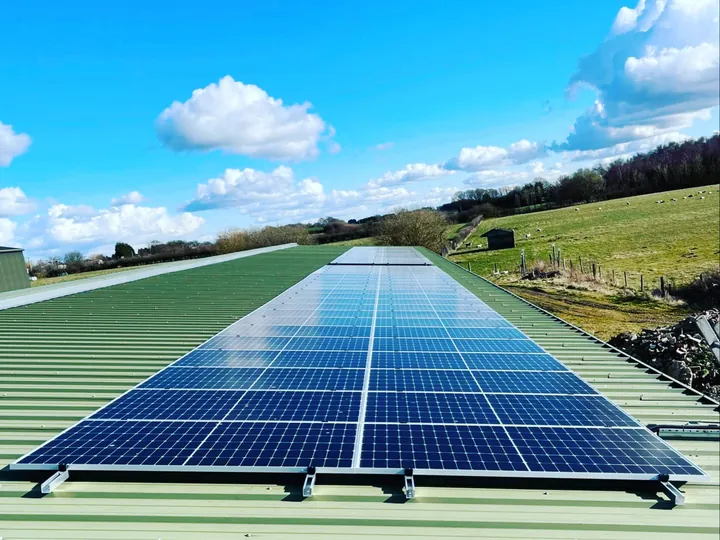
The load is the other half. Dairy units, poultry sheds, cold stores, grain dryers, workshops and farm shops all use power through the day, and agricultural tariffs carry the same steep unit rates as any small business. Every unit your panels make and you use yourself is a unit you don’t buy. That’s the basis on which we design every commercial solar panel installation, and a farm’s daily load curve is usually lumpier than a factory’s, with sharp peaks around milking or feeding and quiet spells in between.
Weather is less of a problem than its reputation. The Pennine edge around Saddleworth and Rochdale is wetter and cloudier than the Cheshire side of Manchester, and you should expect a few percent less output up there than on a lowland site near Leigh. Panels still work under cloud. What matters more is shading from hills, trees and neighbouring buildings, which we model per roof.
Barn and shed roofs: load checks and asbestos-cement sheets
Before anyone talks about panels, someone needs to know what’s holding the roof up. A typical array adds something like 12 to 15 kg per square metre once panels and rails are counted (our estimate, as it varies with the kit). Modern steel portal frames usually take that comfortably. Older timber-pole barns, lean-tos and sheds built cheaply decades ago are a different matter.
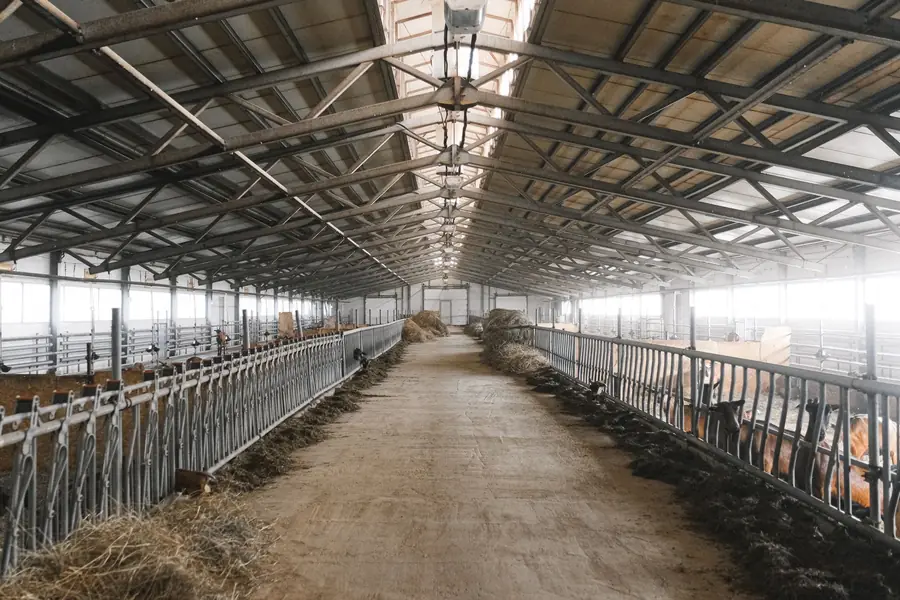
A structural engineer looks at the frame, the purlin size and spacing, the condition of the fixings and any corrosion where livestock have been housed underneath. Ammonia from cattle or poultry eats at steelwork and fixings over the years, so a shed that has housed animals for a long time deserves a closer look than a machinery store. Wind matters too. An exposed shed on a hillside above Delph or Norden takes more uplift than one tucked into a valley, and the mounting design has to cope with that.
Then there’s the roof covering itself. A great many farm buildings from before 2000 have asbestos-cement sheets, and you cannot simply drill through them and bolt on rails. The choice comes down to over-cladding with new steel sheets, stripping and re-sheeting, or leaving that roof and putting the panels somewhere else. We’ve covered each option in our guide to solar on an asbestos-cement roof. On a farm the practical answer is often a mix: re-roof the shed that badly needs it anyway, and leave the older one alone.
Ground-mounted arrays on spare land
If the roofs are poor, the wrong way round or already crowded with rooflights, a field corner can do the job instead. A ground array can face due south at the best tilt, it’s easy to reach for cleaning and repairs, and it doesn’t care what the building underneath is made of.
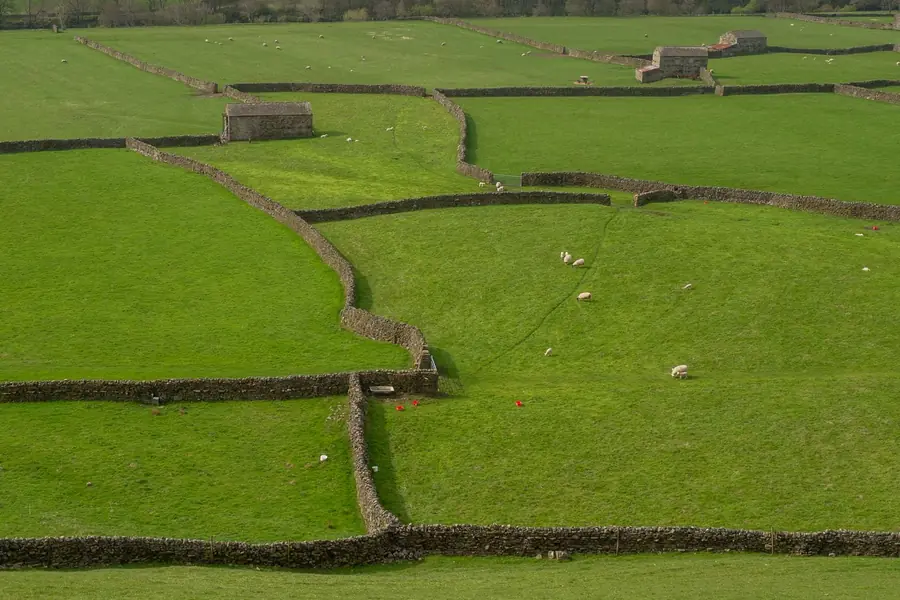
As a rough guide, a 50kW ground array needs something like 0.1 to 0.15 hectares once you allow for row spacing, access and a fence line (our estimate; slope and layout move it). That’s a small paddock or an awkward corner that’s hard to work anyway. Sheep can graze between and under the rows, which keeps the grass down. Cattle can’t, as they rub on and damage the frames.
The costs differ from a roof job. You pay for piling or ground screws, the frame, fencing and, often the biggest surprise, the trench and cable run back to the farm’s main board. Keep the array close to the building it feeds. Our ground-mounted solar page explains how the piling and cabling are done.
Matching generation to dairy, poultry and cold-store loads
Each type of farm uses power on a different clock, and the array and any battery should be sized to that clock, not to the roof.
Dairy
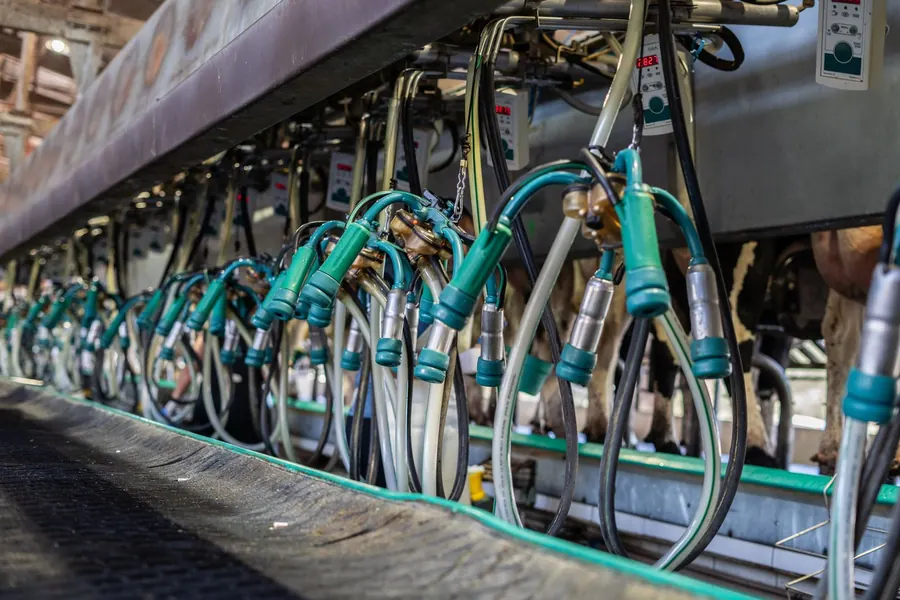
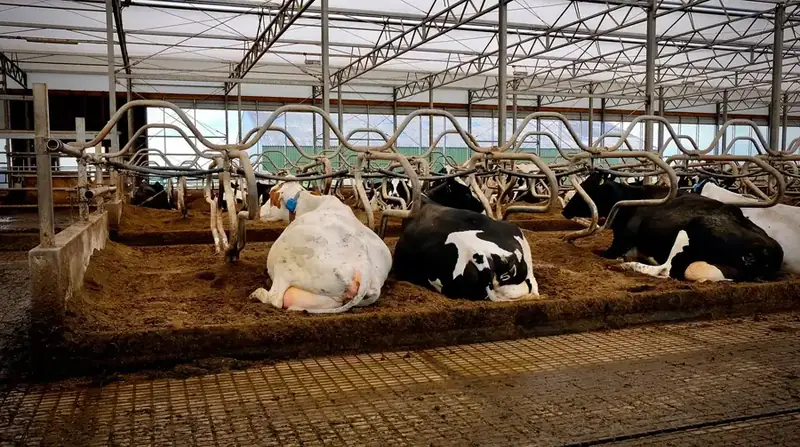
According to AHDB’s guidance on understanding farm energy use, figures from a Welsh project put milk cooling at 38% of a dairy’s electricity, water heating at 30% and vacuum pumps at 20%. Those three loads cluster around milking. Afternoon milking and the cooling that follows sit well inside the solar day for most of the year. The early-morning milk, often started at 5am, does not, and nor does water heating that runs overnight on a cheap rate. Fitting a plate cooler before adding solar is often the cheapest first step, since it cuts the cooling load the panels then have to cover.
Poultry
Broiler and layer sheds run ventilation fans and lighting for long hours, and fan demand climbs on warm afternoons exactly when the panels peak. Heating is often gas or biomass, which keeps that load off the electricity bill. Poultry is generally one of the better fits for a daytime-heavy array.
Cold stores and farm shops
Refrigeration runs around the clock but works hardest in the heat of the day. A potato or fruit store, or chillers in a farm shop, give a steady base load that soaks up solar output across the year. Workshops, grain dryers and bale handling add spikier daytime demand on top.
Battery storage for early milking and evening loads
A battery earns its keep by moving surplus solar into hours when you’d otherwise buy from the grid. On a dairy farm the obvious target is the early-morning milk. On a farm shop it might be the late afternoon.
The test is simple. Take your typical daily surplus once the farm’s own daytime use is met, and compare it with what you draw before the sun comes up or after it goes down. The useful battery size sits close to the smaller of the two. In a Pennine December the panels make a fraction of their June output, so the battery will barely fill from solar in deep winter. Some farms also charge it overnight on a cheap tariff, which can work, but it changes the export and rates picture. Our guide to whether a battery pays for a Manchester business runs through that arithmetic.
There’s a second reason farms look at storage: resilience. Rural lines go down in storms, and a dairy can’t wait long for the milking machine or the bulk tank cooler. A battery can keep critical circuits running through a short cut, but only if it’s designed and wired with backup in mind from day one. Many farms will still want a generator for long outages.
Grid connection on rural networks
Town-centre businesses rarely think about the cable in the road. Farms have to. Plenty of farms on the edges of Rochdale, Bury and Saddleworth are fed by a long overhead line and a small pole-mounted transformer, and some are still on a single-phase supply.
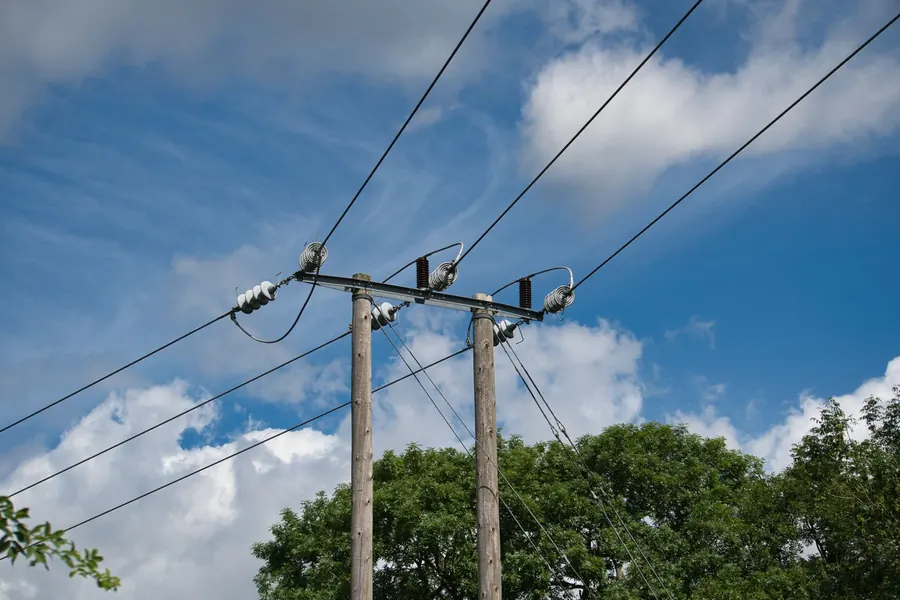
That matters in two ways. First, a single-phase supply limits how much inverter capacity you can connect without upgrading, and anything above the small-scale G98 limit of 16 amps per phase needs a G99 application to SP Electricity North West. Second, a thin rural network may not be able to take much export, so the network operator can offer a connection with an export cap. On a farm that uses most of its generation, an export limit often costs very little. On a farm hoping to sell a lot of surplus, it changes the sums.
Upgrading to three-phase or replacing a pole transformer can add months and cost real money, so ask early. Our post on the G99 process and export limits covers timescales in detail.
Planning for agricultural buildings and the green belt
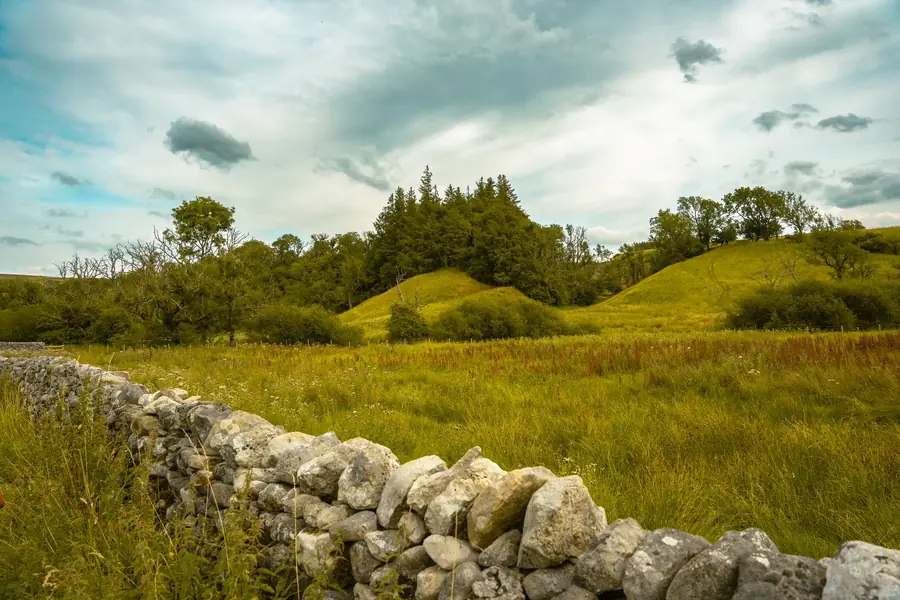
Much of the farmland on the Greater Manchester fringe is green belt. For roof panels that rarely matters. For ground arrays it matters a lot.
Panels on the roof of a non-domestic building, agricultural sheds included, normally fall under permitted development. The panels can’t stand more than 0.2 metres proud of a pitched roof, and arrays over 50kW need prior approval from the council on design, appearance and glare. Listed barns and buildings in a conservation area are the exceptions, and Saddleworth has a number of both. Our planning guide sets out the limits and which council deals with which borough.
Ground arrays are different. Stand-alone solar on non-domestic land is only permitted development up to 9 square metres, so a real farm array needs a planning application. In the green belt it will usually count as inappropriate development, which means it needs very special circumstances. The national planning policy on green belt land, in force since August 2026, says those circumstances may include the wider environmental benefits of renewable energy. A small array sited next to existing buildings, screened by a hedge, sized to the farm’s own use and easy to remove later stands a much better chance than one in the middle of an open hillside.
Farm solar costs and payback in 2026
The government’s 2025/26 cost data puts 10-50kW installations in the North West at a mean of about £1,248 per kW, including installation and connection but not batteries. Ground arrays, re-roofing and network upgrades come on top.

Here’s a worked example, and it is an illustration, not a quote. A 30kW array on a dairy shed roof would cost around £37,400 on that per-kW figure. At about 850 kWh per kW it would make roughly 25,500 kWh a year. If 80% is used on the farm at 27p per unit, that saves about £5,500. The remaining fifth exported at an assumed 5p (our estimate; export rates vary a lot) adds roughly £250. Simple payback comes out at around six and a half years before tax relief. The 80% self-use and the 27p rate are assumptions to replace with your own meter data and tariff.
Tax helps. Farm businesses, including sole traders and partnerships, can claim solar under the £1 million Annual Investment Allowance; our tax relief guide explains the detail. On grants, the Farming Equipment and Technology Fund 2026 closed on 12 May 2026 and its themes didn’t include solar, so don’t count on grant money unless a new round opens. Our cost guide covers what moves a quote, and the finance guide compares buying, leasing and a PPA.
If you farm anywhere around Greater Manchester, send us a year of electricity bills and book a site survey.
Frequently asked questions
Can solar panels go on an old asbestos-cement barn roof?
Not by drilling fixings straight through the sheets. Fibre-cement sheeting of that age is fragile, and cutting or drilling it disturbs asbestos. The usual choices are over-cladding the roof with new steel sheets fixed back to the purlins, stripping and re-sheeting it before the panels go on, or leaving that roof alone and putting the array on the ground or on a newer shed. An asbestos survey comes first in every case.
How much of a dairy farm's electricity can solar cover?
Rarely all of it, because morning milking, water heating and the first cooling run happen before the panels are producing much, especially in winter. Afternoon milking and daytime cooling, pumps and lighting line up far better. A modest array sized to that daytime load gets used almost entirely on site. A battery can then carry some afternoon surplus into the early-morning milking, mostly from spring to early autumn.
Do we need planning permission for a ground-mounted solar array in the green belt?
Almost certainly, for anything bigger than a few panels. Permitted development for stand-alone solar on non-domestic land is limited to 9 square metres, and a larger ground array in the green belt is normally treated as inappropriate development. The national policy allows that very special circumstances can include the wider environmental benefits of renewable energy, so applications do succeed, but they need a proper case on siting, screening and reversibility.
Is there a government grant for solar panels on farms in 2026?
Not one we can point to as open right now. The Farming Equipment and Technology Fund 2026 ran from 17 March to 12 May 2026, and its published themes were productivity, slurry and animal health and welfare, with no solar theme. Farm businesses can still claim the £1 million Annual Investment Allowance on solar panels. Check with the Rural Payments Agency or your adviser for any later round before you plan around a grant.
Thinking about solar or a battery for your site?
Send us a year of half-hourly data and we'll tell you, in writing, what size of system makes sense and roughly what it would save. Manchester, Salford, Trafford, Bolton, Wigan and in between.