
11 November 2026
Commercial Solar On An Asbestos-Cement Roof In Greater Manchester
Asbestos-cement roof and commercial solar in Greater Manchester: the survey you need, over-clad vs strip vs coat, ground-mount options, costs and timescales.
Talk to anyone who looks after older industrial property in Greater Manchester about solar and the same problem comes up. The economics work, the demand profile suits it, and then someone points out that the roof is asbestos-cement. That can feel like the end of the conversation. It rarely is. Asbestos-cement sheeting went onto UK sheds until the ban on its use in 1999. Trafford Park has been building factories since 1896, and estates in Ardwick, Openshaw and around Oldham and Bolton are full of postwar units still wearing their original sheets. Any work on them has to keep airborne fibres under HSE’s control limit of 0.1 fibres per cubic centimetre, averaged over four hours, so nobody sensible drills solar rails straight into them. This guide covers what has to happen first: the survey, the four realistic routes (over-clad, strip, coat or go elsewhere), and roughly what each means for cost and programme.
Why an asbestos-cement roof stops a commercial solar install
The problem isn’t the panels. It’s everything needed to fix them down. A rail system on a profiled roof needs brackets every metre or so, each one through the covering into a purlin, and hundreds of them on a decent-sized array. On asbestos-cement every fixing is a hole drilled in an asbestos product, and every person fitting them is standing on a surface that won’t hold their weight.
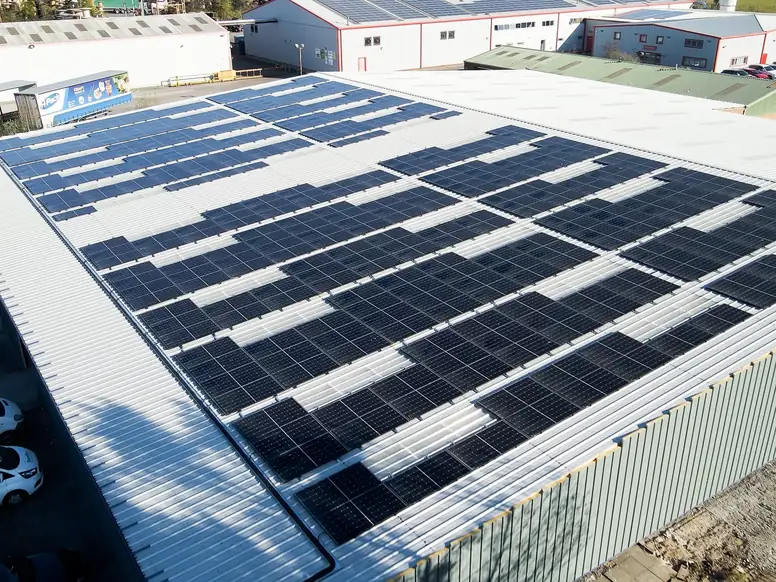
Then there’s lifespan. Panels are bought on a 25-year view, and a sheet that went up in the 1960s or 1970s is unlikely to last another 25 years without trouble. Manchester’s damp suits moss and lichen, which hold water against the sheets and speed up the weathering. Insurers, funders and landlords all know this. Most of them will ask what the roof is made of before they approve a rooftop array.
None of that makes the building a write-off for commercial solar panels in Greater Manchester. It means the roof decision comes first, and the solar design follows it.
The asbestos survey for a solar project: register first, then a refurbishment survey
If you own or manage a non-domestic building, the duty to manage asbestos under the Control of Asbestos Regulations 2012 probably already sits with you. On a lease it may sit with the landlord, the tenant or both, depending on who’s responsible for repairs. So the first job is to dig out the asbestos register and the survey behind it.

That register usually comes from a management survey. It tells you where asbestos is during normal use of the building, and it often presumes things rather than testing them. A solar project is different, because brackets, cut sheets or a replacement roof all count as disturbing the fabric. HSE’s guidance on arranging an asbestos survey describes the refurbishment survey that’s needed before that kind of work. It’s intrusive, the area has to be cleared while it’s done, and the surveyor confirms the space is fit to reoccupy afterwards. HSE strongly recommends a UKAS-accredited surveying organisation, and the samples go to an accredited lab.
For a roof-only scheme, the survey can usually be limited to the roof sheets, ridge cappings, gutters, downpipes and any old rooflights. Ask for it to cover the fixings and the underside too, since lining boards or old sprayed coatings sometimes turn up beneath the sheets.
Asbestos-cement or later fibre-cement?
The 1999 date isn’t a clean dividing line. Asbestos-free fibre-cement sheets were made for years before the ban, and old stock carried on being fitted for a while after it. From the ground the two look almost identical, and grey corrugated sheets age the same way whatever is in them. A date stamp on the sheet or a builder’s invoice is a clue, but only lab analysis settles it. Either way, both types are fragile and both need the same care when anyone works on them.
Over-cladding an asbestos-cement roof for solar
Over-cladding is the route most owners take, because the old sheets stay where they are and the building can usually keep running underneath. A spacer or bracket system is fixed through to the existing purlins. New profiled steel sheets go on top, often with insulation in the gap. The solar rails then fix to the new steel skin, and nothing else goes through the asbestos.
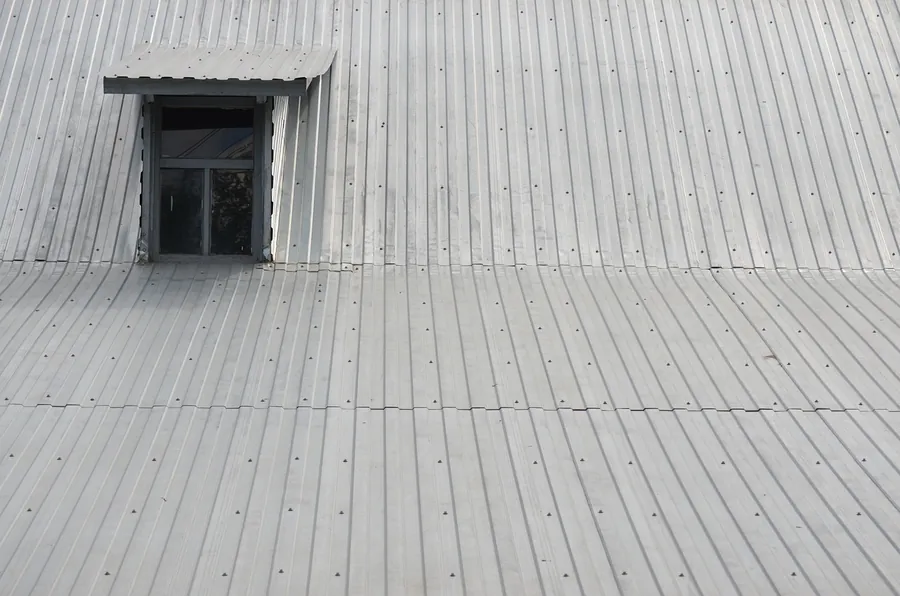
The spacer fixings do go through the old sheets, so that part of the job is still asbestos work. It’s normally non-licensed, but it has to be done by trained operatives using the controls HSE sets out. Over-cladding also leaves the asbestos in the building. It stays on your register, covered and sealed, and whoever owns the building in 20 years still has to manage it.
Two more things to check before you commit. A structural engineer has to confirm the purlins and frame can carry the new sheets, the spacer system and the array together, because over-cladding adds its own weight before any panels arrive. And if the building is heated, putting a new skin over most of the roof can count as renovating a thermal element under the Building Regulations. That can mean insulating to current standards, so talk to building control or an approved inspector early. It’s extra cost, but it also cuts heating bills, which the original single-skin sheets never did.
Stripping the asbestos-cement roof and re-sheeting
Taking the sheets off completely costs more and disrupts more, but it gets the asbestos out of the building for good. Some owners want that clean break, particularly before selling or re-letting.
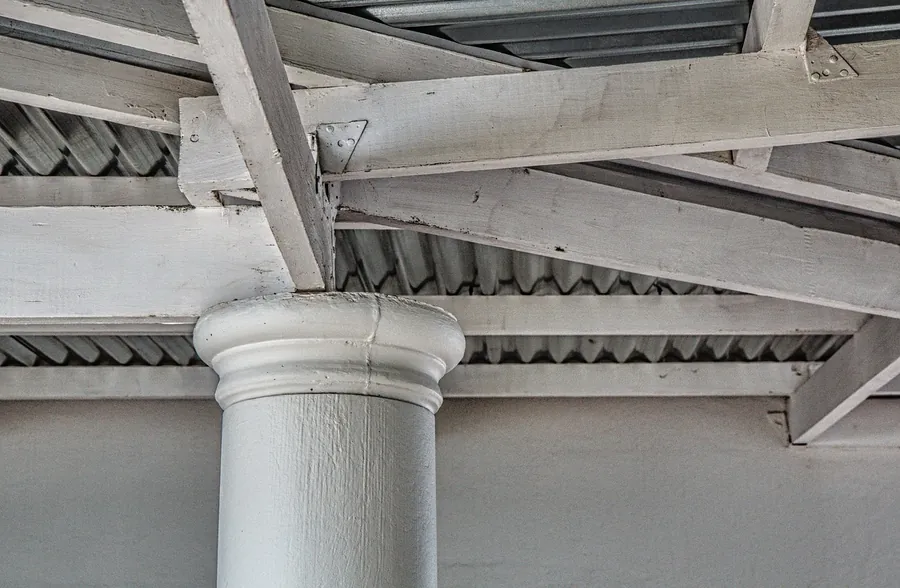
HSE’s guidance on non-licensed asbestos work puts removal of asbestos-cement sheets that come off whole in the non-licensed category, even if they’re weathered. Where sheets will be smashed or dropped, it becomes notifiable non-licensed work. The contractor then has to notify the enforcing authority before starting, keep workers under medical surveillance at least every three years and hold records for 40 years. A good contractor plans the job so the sheets come off whole, usually working from below on a mobile platform or behind safety netting rather than walking the roof.
Asbestos-cement is hazardous waste once it comes off. It has to be wrapped, carried by a registered waste carrier and taken to a permitted site with the paperwork that goes with it. GOV.UK’s rules for businesses disposing of hazardous waste set out what that involves. Keep the copies, because a buyer’s solicitor may ask for them.
The space beneath usually has to be cleared while each bay is stripped and re-sheeted, which is the real cost for a working factory or warehouse. The benefit is a new roof designed with the array in mind: purlin positions, sheet gauge, rooflight layout and cable routes all chosen before the first panel arrives.
Encapsulation coatings: a tidy roof, but a poor base for solar
Coating the sheets with a sealant is the cheapest of the four options. Consumer price guides tend to put it at around £30 per square metre, though industrial roofs vary a lot with access and condition. HSE counts encapsulating asbestos materials in good condition as non-licensed work. It stops the surface weathering, locks in loose fibres and can buy a sound roof several more years.
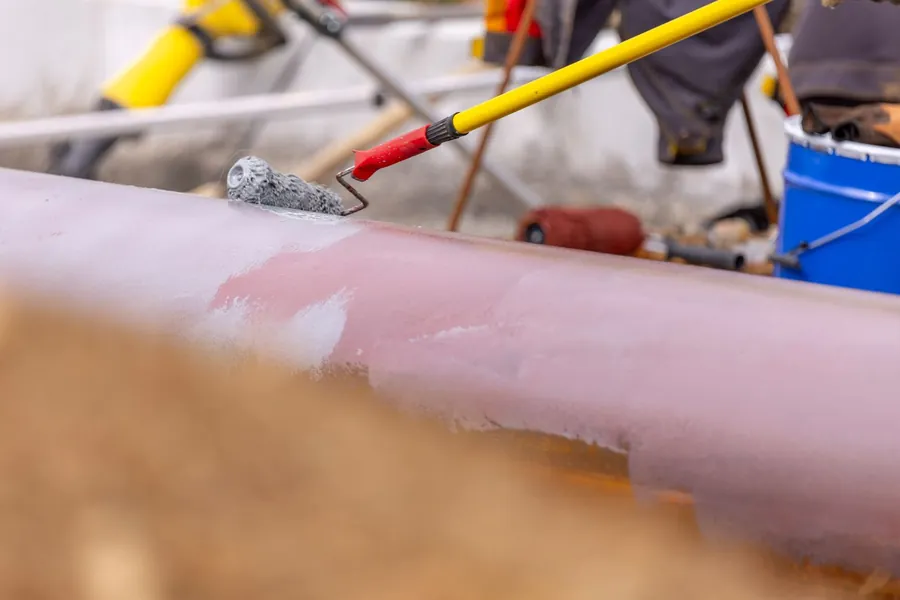
What it can’t do is make the roof suitable for solar. The sheets are just as brittle and just as fragile underfoot afterwards, and each bracket would punch through the coating into the asbestos. If you’re keeping a roof and putting the panels somewhere else, encapsulation can make sense. As a way of getting panels onto that roof, it doesn’t work.
Leaving the roof alone: ground-mount and carports
Sometimes the honest answer is that the roof isn’t worth the spend. It might have only a few years left, belong to a landlord who won’t approve the work, or sit on a frame too light to take an over-clad and an array. If the site has room, the panels can go somewhere that never touches the asbestos.
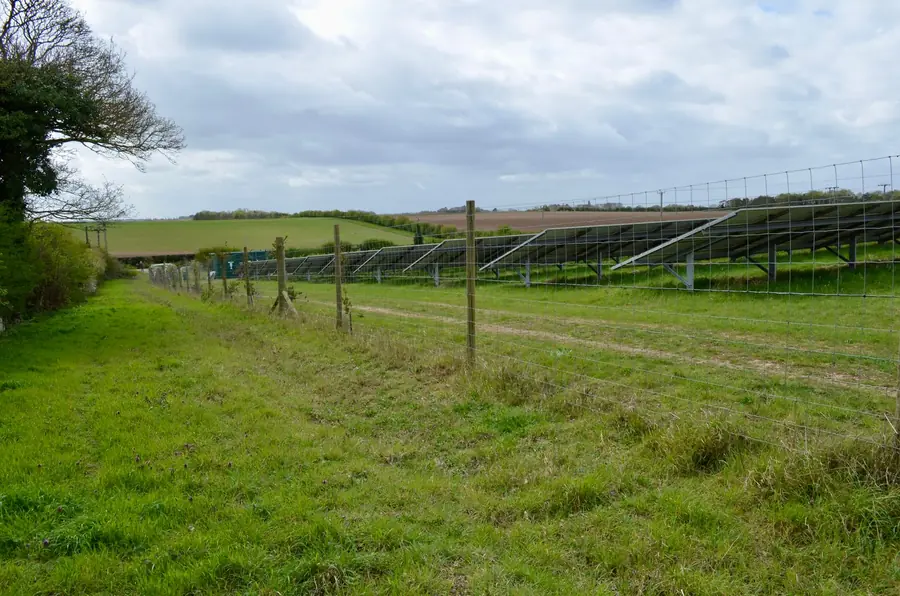
A ground-mounted array suits a site with spare land, an unused corner of the yard or a paddock at the back of the unit. Staff and visitor parking can carry solar carport canopies, which put the generation right where the cars are and keep everyone dry walking in. Both avoid asbestos work, roof access and roof-based fire concerns, though they bring their own planning and groundwork questions. Some owners do both: they encapsulate the old roof to keep it in reasonable shape and put the generation on the ground.
Costs and timescales for solar on an asbestos-cement roof in Greater Manchester
Every roof is priced on its own, so be wary of anyone quoting a firm figure before a survey. What you can do is understand the cost order. Encapsulation is cheapest but isn’t a solar route. Over-cladding comes next, and the bill goes up with insulation, access and any purlin strengthening. Full strip and re-sheet costs most once you add waste disposal, protection for the space below and lost working time. Ask for the roofing priced per square metre as a separate line from the solar, so you can compare quotes properly and see what each part costs.
A realistic order of work looks like this:
- Find the existing register and management survey, and check who holds the duty under the lease.
- Commission a refurbishment survey of the roof. Site time is usually short, and lab results tend to follow within days, not weeks.
- Get a structural check of the frame and purlins against the chosen roofing route plus the array.
- Choose the route, get roofing and solar priced, and get landlord, insurer and building control sign-off where needed.
- Programme the roof works for the drier months if you can. Wet, windy weeks on the edge of the Pennines slow sheet work and make fragile roofs more dangerous.
- Install the solar once the new skin is down and signed off.
The roofing can easily take longer than the solar fit. The grid side doesn’t have to wait for it, though. A G99 application to the network operator can run alongside the survey and roof design, so the connection is ready when the roof is. If you’re still working out whether your building is a candidate at all, our roof check for commercial solar in Manchester covers loading, roof life and the wider survey.
Frequently asked questions
We already have an asbestos register. Do we need another survey before solar goes on?
Usually, yes. A register normally comes from a management survey, which is built around day-to-day occupation and maintenance and doesn't open things up. Fixing brackets, cutting sheets or lifting a roof counts as refurbishment, and HSE expects a refurbishment survey of the areas being worked on before that starts. Often it only needs to cover the roof, the gutters and the fixings, so it's quicker than surveying the whole building.
Does taking an asbestos-cement roof off need a licensed contractor?
Normally not. HSE treats asbestos-cement as a lower-risk material, and removing it is non-licensed work if the sheets come off carefully without being broken up, including weathered ones. If the sheets will be broken or the work will create a lot of dust, for example on a fire-damaged roof, it becomes notifiable non-licensed work. That means telling the enforcing authority before work starts, medical checks for the workers and records kept for 40 years. Either way, the people doing it must be trained and the waste goes away as hazardous waste.
Can solar panels be fixed to an asbestos roof that has been coated or encapsulated?
Not sensibly. A coating seals the surface and can buy an old roof a few more years, but it doesn't make the sheets any stronger or any less fragile. Every bracket would mean drilling through the coating and the asbestos underneath. Encapsulation is a reasonable way to look after a roof you're keeping. If you want panels on it, over-cladding or re-sheeting is the normal route.
Who arranges the asbestos survey on a leased industrial unit?
Whoever holds the duty to manage, which depends on the lease. On a full repairing lease that's often the tenant; on a multi-let estate the landlord usually keeps responsibility for the roof. In practice the landlord has to agree to any work on their roof anyway, so the survey, the roofing route and the solar design are best agreed with them at the start.
Thinking about solar or a battery for your site?
Send us a year of half-hourly data and we'll tell you, in writing, what size of system makes sense and roughly what it would save. Manchester, Salford, Trafford, Bolton, Wigan and in between.