
13 November 2026
Commercial Solar Tax Relief For Greater Manchester Businesses
Capital allowances, VAT, business rates and export income on commercial solar in Greater Manchester, and what the tax rules really do to payback.
Ask a Greater Manchester finance director what puts them off commercial solar and “the tax side” comes up surprisingly often. Not because the tax is bad. Because nobody explains it in one place. Here’s the short version. Solar panels are special rate plant, so a company can claim 50% of the cost against profits in the first year, or all of it under the £1 million Annual Investment Allowance. VAT is charged at 20% but most businesses claim it back. In England, eligible onsite renewable and storage plant is exempt from business rates until 31 March 2035. And every pound of export income is taxable. None of these rules is complicated on its own. The confusion comes from how they interact, and from the claim that tax relief makes solar “pay for itself”. It helps, but less than the sales brochures suggest. This guide covers commercial solar tax relief rule by rule, then works through what it does to payback. Treat it as general information, not tax advice: your accountant has the final word.
How commercial solar tax relief works for Greater Manchester firms
Any commercial array raises four separate tax questions, and different parts of the system answer them. How fast does the cost come off your taxable profits? That’s capital allowances. Is the 20% VAT on the invoice a real cost or just a cash-flow blip? Does the Valuation Office Agency add anything to your rateable value? And how is the money you’re paid for exported electricity taxed?
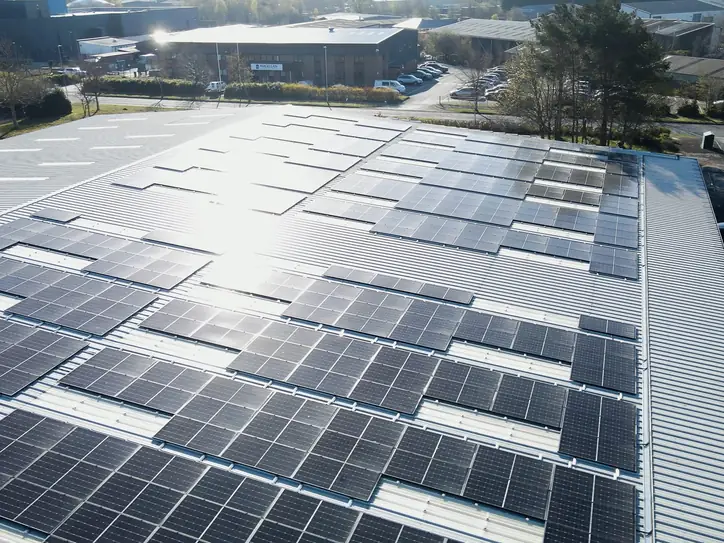
Who you are changes the answers. A limited company running a distribution unit in Trafford Park gets different allowances from a sole trader with a workshop in Leigh, and a care home operator in Stockport sits in a different VAT position from a manufacturer in Oldham. A charity may get little or nothing from capital allowances at all. That’s why we ask how the business is set up before we model payback on commercial solar panels in Greater Manchester. The same roof can give three different answers.
Capital allowances on solar: AIA, the 50% allowance and the special rate pool
HMRC puts solar panels in their own category. GOV.UK’s page on capital allowance rates and pools lists solar panels in the special rate pool, which is written down at just 6% a year on a reducing balance. Left there, a £100,000 array would take decades to be fully relieved. That’s why the first-year routes matter.

For limited companies
A company has two ways to front-load the relief. The first is the Annual Investment Allowance. It’s £1 million per accounting period, covers most plant and machinery, and gives 100% relief in the period you buy. Most rooftop systems in Greater Manchester come in far below that ceiling.
The second is the 50% first-year allowance for special rate assets. GOV.UK’s full expensing guidance is clear that only companies can claim it, and the kit has to be new and unused. Half the cost comes off profits in year one and the other half goes into the special rate pool at 6%.
Full expensing itself, the 100% allowance, is for main rate assets, so solar doesn’t get it. The same goes for the newer 40% first-year allowance that started on 1 January 2026. Its conditions require plant that qualifies for the main rate, which rules solar panels out. And the cut in the main writing down rate from 18% to 14% from April 2026 doesn’t touch solar either, because solar was never in that pool.
For sole traders and partnerships
Unincorporated businesses can’t use the 50% allowance, but they can use the AIA, as can partnerships whose members are all individuals. For a farm business near Wigan or a family haulier in Bury putting £60,000 of panels on a shed, the AIA usually covers the lot. Spend over the AIA falls back on the 6% rate.
AIA or 50% allowance: choosing, and when to buy
If you’re a company with AIA to spare, the AIA usually wins. You get 100% relief rather than 50%, and you avoid having half the cost trickle out of the special rate pool for years. Where the AIA is already stretched by machinery, vehicles or a fit-out, businesses can generally decide where to allocate it. Accountants tend to point it at special rate spending first, because main rate spending can still get full expensing.
Timing matters more than people expect. The AIA can only be claimed in the period you bought the item, and the allowance resets each accounting period. A project that slips from March into April, for a company with a 31 March year end, lands its relief in the following year. If your profits are lumpy, that can matter. Talk to your accountant about which side of the year end suits you before the installer books the scaffold.
Relief is also only worth having if there are profits to set it against. A company making a loss this year may carry the loss forward rather than get cash back now. And if you’re paying for the system on hire purchase, the tax treatment follows you even though a funder paid the installer. Our guide to buying, leasing or using a PPA for commercial solar covers how each funding route changes who claims the allowances.
VAT on a commercial solar installation
Commercial installations are standard-rated at 20%. The zero rate you’ll see quoted online is for energy-saving materials in homes and, since 1 February 2024, in buildings used solely for a relevant charitable purpose. It runs until 31 March 2027, when the rate reverts to 5%. A factory, office, warehouse or shop doesn’t qualify.
For most VAT-registered businesses that’s fine. You pay the VAT on the installer’s invoice and reclaim it as input tax on your next return, so the real cost is the net figure. The money is tied up until that return is processed, which is worth planning for on a six-figure project but isn’t a cost.
The people who need to look harder are the partly exempt. Care homes, insurance brokers and residential landlords make exempt supplies, and partial exemption rules can stop them recovering all the VAT on a shared asset like a roof array. Care home groups are the obvious example. If that’s you, the VAT may be a real cost, and it belongs in the payback sums from day one.
Business rates: the exemption for onsite renewables and storage
This is the rule most people don’t know about. In England, regulations made in 2022 take eligible plant and machinery out of the rating valuation where it’s used for generation or storage relying mainly or exclusively on renewable sources such as photovoltaics. The exemption started on 1 April 2022 and applies to any day before 1 April 2035.
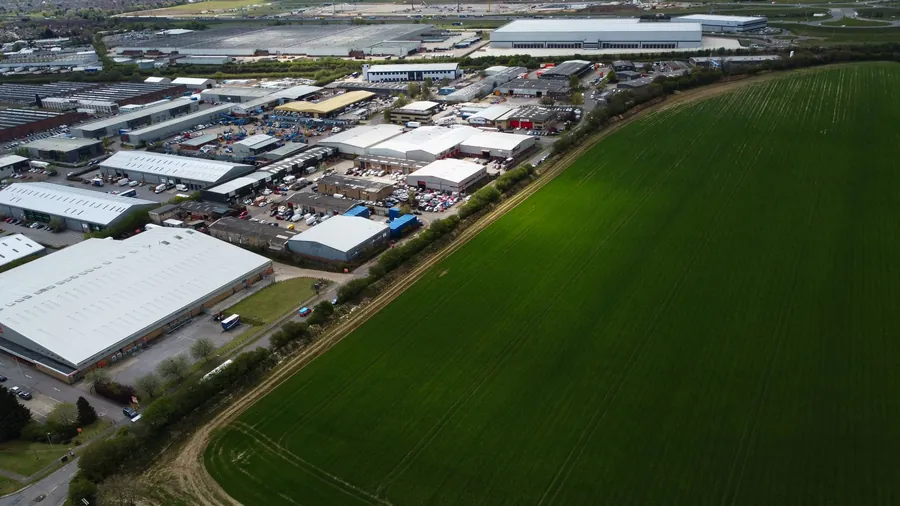
In practice that means a rooftop array on a unit in Ashton, Rochdale or Middleton shouldn’t push up the rateable value, and neither should a battery that mostly stores your own solar output. Before 2022, onsite generating plant could be counted in a valuation, so this is a genuine change.
Two caveats. A battery that does most of its charging from cheap overnight grid electricity may not pass the “mainly or exclusively” test, so take advice before relying on it. And 2035 is a fixed date. Nobody knows what replaces the exemption, so we’d model the last decade of a 25-year array with an allowance for rates rather than assume it stays free.
How solar export income is taxed
Exported power earns money under the Smart Export Guarantee or a negotiated export deal, and for a business that money is taxable. The income tax exemption that lets homeowners ignore their export payments only applies to individuals generating at domestic premises.
HMRC’s business income guidance on export tariff payments was written for the old feed-in tariff, but the principle carries over. Export payments received in a business capacity are business receipts, taxed with the rest of your profits. On the VAT side, HMRC treats export payments to VAT-registered generators as payment for a supply of electricity. Ask your accountant how your export statements should be set up so the VAT is handled properly.
The amounts are usually small next to the savings. Business export rates tend to be a fraction of what you pay per unit to import, which is why we size arrays around daytime use. Our piece on what happens to surplus solar power on a Manchester business site explains that trade-off in more detail.
What tax relief does to payback: a worked example
This is the part sales pitches tend to leave out. The electricity you stop buying is a cost you no longer deduct, so your taxable profit rises by the same amount. Tax relief on the panels and tax on the savings largely cancel out. What capital allowances really change is when you get the money back.

Take an assumed 100kW system costing £110,000 on a company unit. Say it makes 85,000 kWh a year, the business uses 80% on site at 25p a unit (£17,000) and exports the rest at 5p (£850). That’s £17,850 a year before tax. Simple payback before tax: about 6.2 years. Now run it after corporation tax at the 25% main rate.
| Allowance used | Tax relief in year 1 | After-tax payback |
|---|---|---|
| AIA, 100% in year 1 | £27,500 | About 6.2 years |
| 50% first-year allowance, then 6% | £13,750 | About 6.9 years |
| 6% writing down allowance only | £1,650 | About 7.5 years |
With the AIA, after-tax payback lands where the pre-tax figure did, because the cost and the savings are both relieved at 25%. The 50% allowance adds eight or nine months. Writing down at 6% alone adds well over a year, which is the position a sole trader is in once the AIA has been used up elsewhere. The example assumes steady prices, no degradation and no maintenance costs, so treat it as an illustration of the mechanics, not a forecast. A company paying the 19% small profits rate sees the same pattern with smaller numbers.
Questions to take to your accountant before you sign
You don’t need to become a capital allowances expert. You do need to ask the right questions before the order goes in.
- How much AIA have we already used this period, and should the solar take priority?
- Which side of our year end should the installation fall?
- Are we fully taxable for VAT, or will partial exemption limit what we reclaim?
- How should the inverters, cabling and any battery be classed alongside the panels?
- If we rent the building, can we claim allowances on panels fixed to the landlord’s roof?
- What happens to the allowances if we sell the building or remove the system?
- Does any battery we fit charge mainly from our own solar, for business rates purposes?
Bring the answers to the survey and we’ll build the after-tax figures for your own site and usage, not an average one. Book a commercial solar survey in Greater Manchester
Frequently asked questions
Can a sole trader or partnership claim the 50% first-year allowance on solar panels?
No. GOV.UK says only companies can claim full expensing and the 50% first-year allowance. Sole traders and partnerships made up of individuals can still use the £1 million Annual Investment Allowance, which covers solar panels and is enough for almost any rooftop system. Anything above that goes into the special rate pool at 6% a year.
Does the new 40% first-year allowance cover solar panels?
No. The 40% allowance applies to new, unused plant bought on or after 1 January 2026 that qualifies for the main rate of writing down allowance. Solar panels are designated special rate expenditure, so they don't qualify. Ask your accountant how the inverters, cabling and any battery are classed, because the special rate designation names solar panels specifically.
Is a battery still exempt from business rates if we charge it from the grid overnight?
Possibly not. In England the rates exemption covers plant used for generation and storage that relies mainly or exclusively on renewable sources, and it runs to 31 March 2035. A battery that mostly stores your own solar output fits that description. One that mostly stores cheap overnight grid power may not, so get advice from a rating surveyor or the Valuation Office Agency before you assume it's exempt.
Do we pay tax on Smart Export Guarantee payments?
Yes. The income tax exemption for exported electricity is for individuals generating at home, not businesses. HMRC's guidance treats export payments received in a business capacity as ordinary business receipts, so they're taxed with the rest of your profits. If you're VAT registered, HMRC also treats export payments as consideration for a supply of electricity, so check with your accountant how your export statements should show VAT.
Thinking about solar or a battery for your site?
Send us a year of half-hourly data and we'll tell you, in writing, what size of system makes sense and roughly what it would save. Manchester, Salford, Trafford, Bolton, Wigan and in between.