
3 November 2026
Solar-Powered EV Charging For Business Fleets In Greater Manchester
How Greater Manchester businesses pair solar and batteries with fleet and staff EV charging: sizing, overnight vans, load management, grants and payback.
A van fleet and a solar array keep different hours. The panels on a Greater Manchester roof do almost all their work between mid-morning and mid-afternoon, and they do far more of it in June than in December. Most vans are out on the road for exactly those hours and come back to be plugged in as the light goes. That mismatch is the whole design problem. Using PVGIS, a 100kWp array at a 10° tilt in Openshaw makes about 80,300kWh a year, but that averages around 380kWh a day in June and barely 50kWh a day in December. Eight electric vans doing 70 miles a day each will want something like 245kWh from the wall every working night. This guide covers how businesses here make solar, batteries and fleet or staff EV charging work together, and where the numbers stop adding up.
Why fleet charging changes the solar sums
On most commercial sites, solar is sized against the building: the lighting, the compressors, the office kit and the hours they run. Fleet charging adds a second and much hungrier load, and it doesn’t keep office hours.

Businesses usually come to this from the van side. A few diesel vans get replaced with electric ones, the first quarterly electricity bill lands, and someone asks whether the roof could be paying for some of it. Sometimes it can carry a lot. Sometimes it’s the wrong tool for the job and a battery or a cheaper night tariff does more. If you’re at the start of that conversation, our page on commercial solar panels for Manchester businesses explains how we size a roof system before any chargers come into it.
The thing to keep hold of: a unit of solar is worth the same whether the building uses it or a van does. Chargers only improve the solar case when they soak up power that would otherwise be exported cheaply, or thrown away on an export-limited connection. Weekends, bank holidays and long summer afternoons are when that happens.
Daytime and overnight: matching chargers to the panels
Start by sorting your vehicles by when they’re parked, not by what they are. That tells you which ones solar can actually reach.
Vehicles that sit still in daylight
Staff cars on the car park from 8 till 5 are the easiest match there is. They’re plugged in through the solar peak and most only need a top-up. A 30-mile round trip uses somewhere around 8 to 10kWh in a typical electric car, which a modest 7kW charger can replace in a couple of hours of good light. Pool cars that spend half the day at base fall into the same group, as do vans on a split shift that come back at lunch.
Vehicles that only come home at night
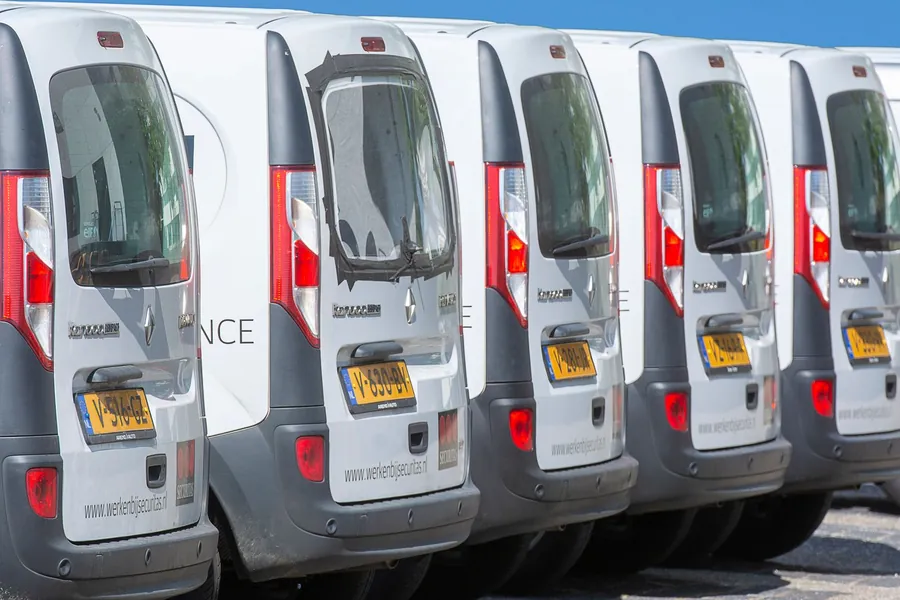
Delivery and service vans are the opposite. They leave at seven, get back at half four and want to be full again by morning. Solar can’t reach them directly. You can either bank the afternoon surplus in a battery and release it into the vans after dark, or accept that they’ll charge from the grid overnight and make sure they do it when power is cheapest.
That last point matters more than people expect. On SP Electricity North West’s network, network charges peak between 4pm and 7pm on weekdays, which is precisely when a van fleet rolls back into the yard. A smart charger that waits until after 8:30pm, when the rate falls into the lowest band, costs nothing to set up and can be worth more each year than a few extra panels.
Sizing the solar against what the vehicles need
Here’s a worked example for a depot on the east side of the city. The figures are deliberately rough. Your telematics will give you better ones.
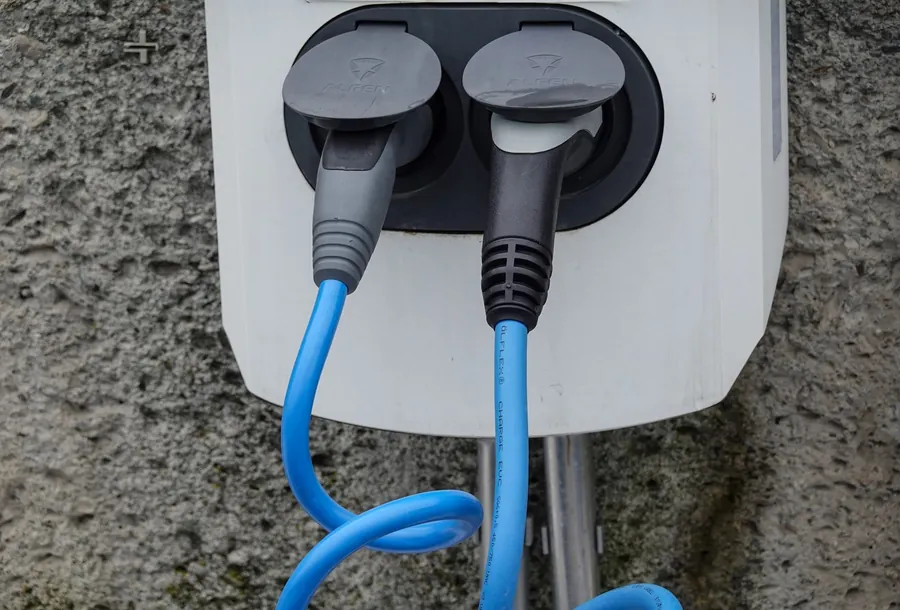
Eight mid-size electric vans each doing 70 miles a day, at roughly 2.5 miles per kWh, need about 28kWh each. That’s 224kWh for the fleet, and nearer 245kWh once you allow around 10% for charging losses. Cold, wet Manchester winters push consumption up further, because heaters and demisters draw from the same battery and efficiency drops in the cold.
Now set that against a 100kWp roof. In June, the PVGIS figure of about 383kWh a day means the array could in theory cover the whole fleet and still have something left for the building. In December, 51kWh a day covers two vans at best, and that’s before the lights and heating have taken their share. Over a full year the array makes more than the fleet’s roughly 61,000kWh, so on paper it looks like a match. It isn’t. Most of that output arrives in summer and in the middle of the day, when the vans are out, so without storage they’d see only a small slice of it.
So size the array for the building and the daytime vehicles first. Treat any overnight van charging it supports as a bonus, unless a battery is part of the plan.
Load management and the grid connection
Every charger you add pushes up the site’s peak demand. Eight 7kW chargers starting at once draw 56kW, roughly 80 amps per phase on a three-phase supply. On an older unit in Salford or Oldham with a modest agreed capacity, that can be the difference between fine and over the limit.
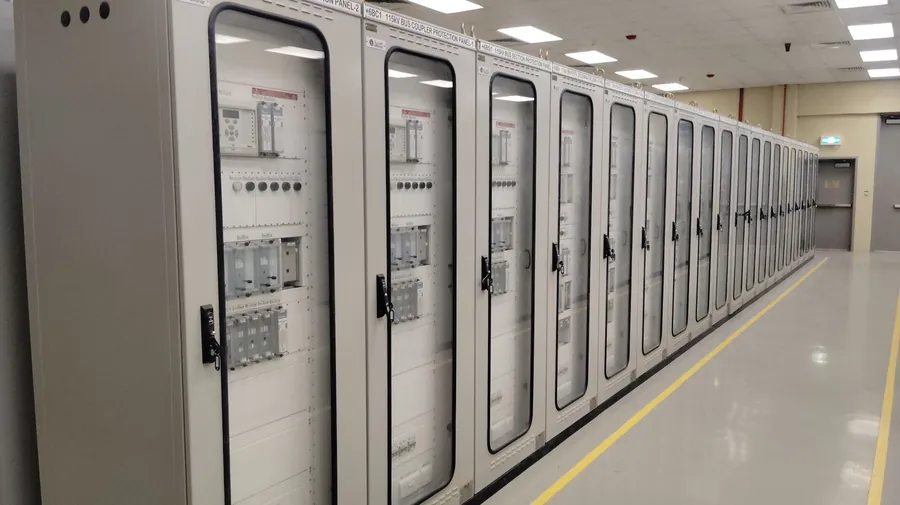
Smart load management solves most of this without new cables in the street. The system watches the site’s total draw and shares whatever headroom is left between the chargers. Each van in our example needs about four hours at 7kW, and it’s parked for fourteen. Run four chargers at a time, or all eight at half power, and the peak halves while every van still leaves full. When the panels are producing, the same system can push more of the solar output into whichever vehicles are plugged in.
You will still need to talk to the network operator in some cases. SP Electricity North West’s guidance on connecting multiple EV chargers says you must apply, rather than just connect and notify, if any charger has a DC output, if the chargers add up to more than 30% of the agreed import capacity on a CT-metered site, or if you’re using a load management scheme at all. Its guide time for a medium site such as a small business or car park is 8 to 12 weeks, and more than six months for large ones. Get that application moving early.
G99 when batteries or bidirectional chargers join in
The solar and any battery are generation and go through the G98 or G99 process in their own right. Vehicle-to-grid chargers that can send power back from a van count too, so they join the same paperwork. If you’re already putting in a G99 application for the array, add the chargers to the same conversation with the network rather than running two separate ones.
Where a battery earns its place in a fleet setup
A battery is the only piece that lets solar reach a van that’s never home in daylight. Whether it pays depends on how much surplus there is to move.

On a site where the building already uses every unit the roof makes on a weekday, there’s little left over to store. On a site that’s quiet after three, closed at weekends or capped on export, the battery fills up most afternoons and empties into the vans in the evening. It can also do a second job: cover the 4pm to 7pm peak for the building while the vans wait their turn, then hand over to cheap overnight grid power.
Batteries also help with the connection problem. If the vans and the building together would exceed your import capacity for an hour or two a day, a battery discharging during that window can keep you under the limit. We’ve set out the wider business case, including capacity charges and backup power, in whether battery storage is worth it for a Manchester business. For fleets, the short version is that a battery sized for one evening’s charging is usually more useful than a bigger one that sits half full in winter.
Clean air rules, grants and tax relief in 2026
A lot of firms in the region started looking at electric vans because of Greater Manchester’s planned Clean Air Zone. That charge never arrived. In January 2025 the government backed Greater Manchester’s investment-led clean air plan instead of a charging zone, with £86 million going mainly on new buses and cleaner taxis. Nobody is charged to drive a diesel van into Manchester, so the case for switching rests on running costs and what your customers expect.

The money that is available:
- Workplace Charging Scheme: up to £500 per socket for installations completed from 1 April 2026, for up to 40 sockets across all your sites. Funding runs to 31 March 2027.
- Capital allowances: charge point spending qualifies for a 100% first-year allowance until 31 March 2027 for Corporation Tax and 5 April 2027 for Income Tax. The panels and any battery fall under different rules, so ask your accountant to keep them on separate lines.
- Depot Charging Scheme: a separate government fund for operators who run a depot and already have, or have ordered, a battery-electric van, HGV or coach. It opens in application windows and the grant rate is set per window, so check the current terms on gov.uk before building it into a budget.
The smaller-business staff and fleets grant closed to new applications on 31 March 2026, so ignore older articles that still quote it.
Staff charging has its own tax angle. Under HMRC’s guidance on charging facilities at or near the workplace, free charging isn’t a taxable benefit as long as it’s open to employees generally, isn’t offered through salary sacrifice, and the employee is driving or riding in the car. If you only let directors charge, that changes.
Questions to put to any installer
Fleet charging projects go wrong when the solar, the chargers and the electrical supply are designed by three different people who never compare notes. Whoever you talk to, ask these.

- Have you looked at our half-hourly meter data and our vehicles’ mileage, or is this sized from a rule of thumb?
- What is our agreed import capacity, and what peak will the site hit once the chargers are running?
- Which charger and load management system are you proposing, and can it prioritise solar power over grid power?
- Does any part of this need an application to SP Electricity North West rather than a notification, and who submits it?
- How much of the solar do you expect to go into vehicles, and in which months?
- If you’re proposing a battery, how many cycles a year will it do and what’s the warranty on capacity?
- Can the chargers be set to avoid the 4pm to 7pm weekday peak by default?
- Which costs qualify for the Workplace Charging Scheme and the charge point allowance, and are they priced separately?
Payback on these projects rarely comes from one big number. It comes from several smaller ones: solar units that would otherwise have gone to waste, vans charged in the cheapest band, a connection upgrade you didn’t have to pay for, and a grant that covered part of the hardware. If the chargers sit under a canopy rather than near the building, our guide to when a solar carport or ground array beats a roof in Manchester covers the steel, groundworks and planning side.
Frequently asked questions
Can our solar panels charge the vans overnight?
Not directly. Panels stop producing at dusk, and most vans are plugged in from late afternoon until the morning. There are three ways round it: store daytime surplus in a battery and release it into the vans in the evening, move some charging into the day when vans come back at lunch, or let the vans charge from the grid overnight when network charges are lowest and keep the solar for the building and for staff cars parked during the day.
Will adding EV chargers mean a grid upgrade from SP Electricity North West?
Not always. Most workplace chargers draw 7kW or 22kW each, and smart load management can share a fixed limit between them so the site never goes over its agreed import capacity. You still need to apply to SP Electricity North West in some cases, including any DC charger, chargers adding up to more than 30% of the agreed capacity on a CT-metered site, and any scheme that uses load management. Their published guide time for a medium business or car park connection is 8 to 12 weeks.
Is there still a grant for workplace charge points in 2026?
Yes. The Workplace Charging Scheme pays up to £500 per socket for installations completed from 1 April 2026, for up to 40 sockets across all your sites, and funding runs until 31 March 2027. Companies can also claim a 100% first-year allowance on charge point spending until 31 March 2027 for Corporation Tax, or 5 April 2027 for Income Tax.
Does Greater Manchester charge vans to drive in a Clean Air Zone?
No. In January 2025 the government approved Greater Manchester's investment-led clean air plan instead of a charging zone. The £86 million package goes mainly on new buses and cleaner taxis, and drivers are not charged to enter the area.
Do staff pay tax if we let them charge their cars at work for free?
Generally not. HMRC exempts workplace charging when the chargers are at or near the workplace, are open to employees generally rather than a chosen few, are not provided through a salary sacrifice or other optional remuneration arrangement, and the employee is the driver or a passenger of the car being charged.
Thinking about solar or a battery for your site?
Send us a year of half-hourly data and we'll tell you, in writing, what size of system makes sense and roughly what it would save. Manchester, Salford, Trafford, Bolton, Wigan and in between.